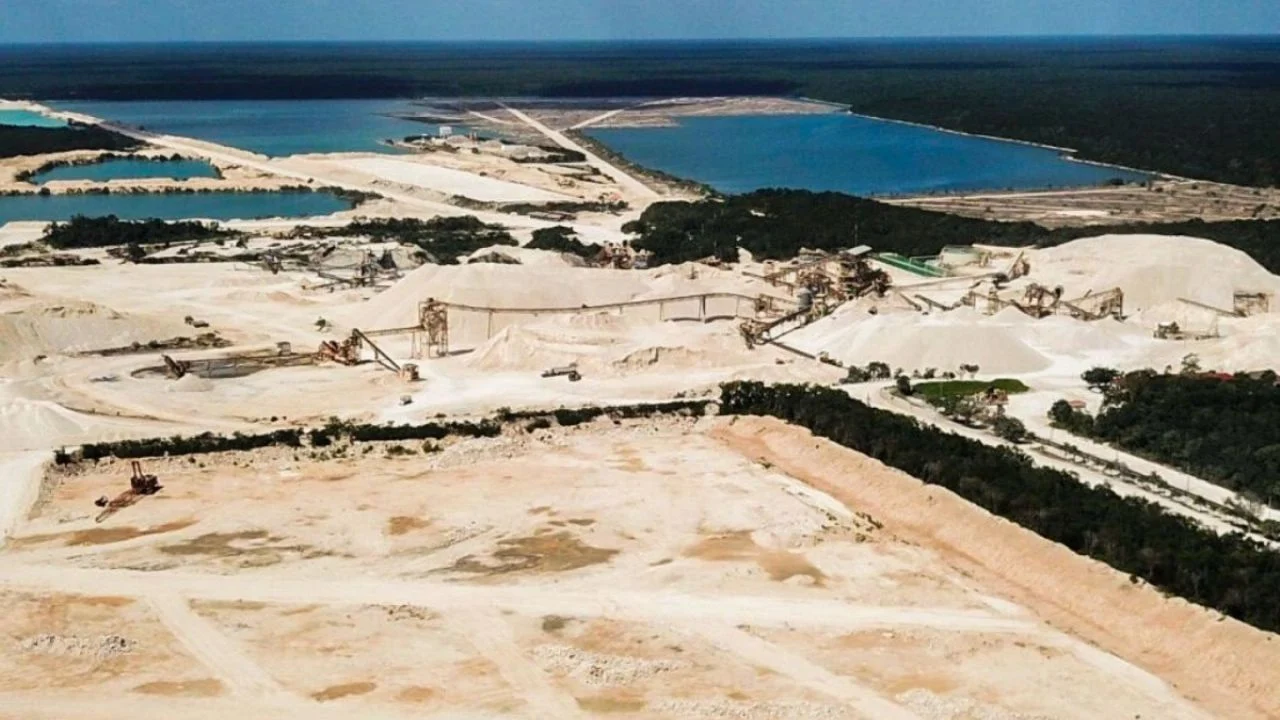
Mexico — The return of mining “on a larger scale” has moved beyond mere declarations. The words of Economy Secretary Marcelo Ebrard at the 2025 International Mining Convention were not empty promises. Multinational mining companies are already enjoying accelerated project liberalization.
It appears the Fourth Transformation administration quickly forgave the extractive industry for poisoning rivers, murdering entire ecosystems, devastating mountains, dispossessing communities, breaking the health of thousands of families, and other environmental, social, and economic crimes that, it must be emphasized, remain unremediated.
The splendor of extractivism is emerging, and shadows of devastation in the name of capital accumulation, known today as Plan Mexico, loom over indigenous, communal, and national territories.
The vindication of mining is clear and is announced with a triumphant tone. The current federal administration has unleashed an offensive to release environmental and water permits that had kept 176 mining projects stalled.
With data and statements from officials of the Economy Secretariat and the governments of Zacatecas, Sonora, Chihuahua, and Durango, the newspaper El Financiero reported on December 11 of an injection of more than 11 billion dollars in extractivist projects to be carried out in those states. However, behind this multi-million dollar figure hides a narrative of devastation, historical debts, and a concerning setback in the country’s environmental policy.
In statements collected by journalist Christopher Calderón, the head of the Coordination Unit for Extractive Activities of the Economy Secretariat, Fernando Aboitiz, celebrates that 65 percent of the “backlog” has been processed. Completing the picture, Zacatecas Economy Secretary Jorge Miranda Castro states victoriously: in one year, the mining industry obtained the permits of the “past six years.”
The express speed in authorization should set off all alarms. The previous administration, with all its lukewarmness, established a containment policy against runaway extractivism, recognizing the historical plunder of resources and socio-environmental conflicts. Today, that regulatory prudence is labeled a “bottleneck” and dismantled. The logic of precaution is changed for that of massive deployment.
The data are concerning. Zacatecas, with projects like San Nicolás (1.1 billion dollars) and the extension of Camino Rojo, consolidates a monstrous dependency: almost 24 percent of its gross domestic product (GDP) depends on an industry voracious for water and generator of eternal environmental liabilities. In Sonora, where the sector already contributes more than 22 percent of GDP, the construction of El Tigre is announced, and there are 83 projects in exploration and expansion. This state, traumatized by unremediated toxic spills, seems condemned to deepen a model that has already demonstrated its danger.
In Chihuahua, there is talk of 3.6 billion dollars in projects, where the official argument is that without mining “it would be very complex to elevate the economic profile of those communities.” It is the colonial discourse of the 21st century: presenting the destruction of territory and poisoning of aquifers as the path to “development,” ignoring the rights of indigenous peoples to decide about their land and future.
Other specific projects are an X-ray of the problem: La Colorada in Zacatecas and Sonora (Pan American Silver, Heliostar), El Pilar of Grupo México (430 million dollars), Cordero in Chihuahua (1.377 billion). Behind these corporate names are concessions over aquifers in regions with severe water stress; fragile ecosystems about to be dynamited; and communities divided and pressured by the promise of ephemeral jobs in exchange for permanent damage.
José Ricardo López, Undersecretary of Business Development of Durango, asks that “the authority continue guaranteeing legal certainty.” That certainty, today, is exclusive to capital. Where is the certainty for communities that will see their wells dry up? Where is the environmental certainty against mining tailings that will be a toxic legacy for centuries? The “regulatory reactivation” that the federal Economy Secretariat boasts of is not accompanied by a parallel strengthening of vigilance, remediation, or respect for free, prior, and informed consultation.
Mexico needs an honest discussion. The past administration attempted, with limitations, to put brakes on a runaway train. Today, they have released the brakes. The 11 billion dollars (about 200 billion pesos) in investment are not a triumph, but the stock market quotation of Mexican environmental and social sovereignty. Permits are being released, but the future of these regions is being chained to an extractive model that historically has meant wealth for a few and desolation for many. The real “backlog” was not of procedures, but of justice. And that remains unresolved.
Discover more from Riviera Maya News & Events
Subscribe to get the latest posts sent to your email.