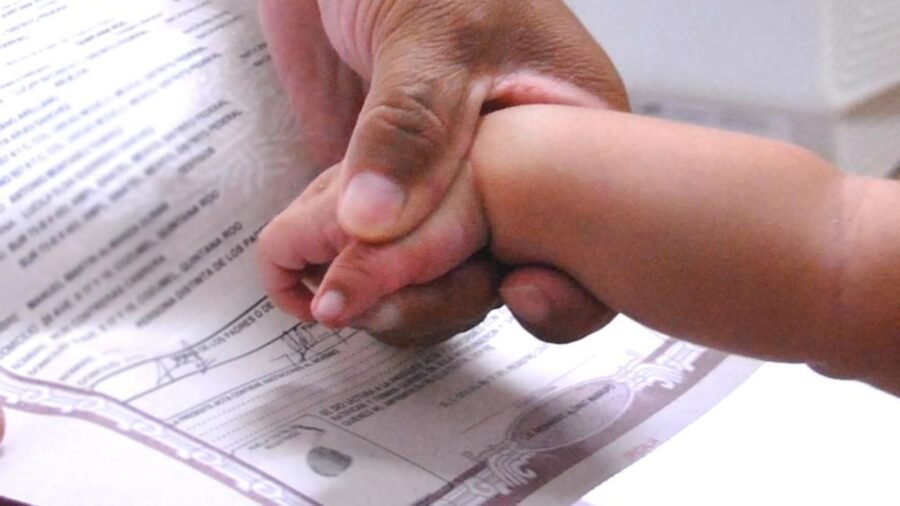
Mexico City — Mexican families can now choose whether children receive their mother’s or father’s surname first, following a landmark Supreme Court ruling that ends centuries of paternal-first tradition.
The decision by Mexico’s Supreme Court of Justice applies nationwide and declares unconstitutional any requirement that children must carry their father’s surname first. The ruling came after a case filed with the Civil Registry in Yucatán state.
Mexico’s highest court determined that imposing a specific surname order violates constitutional rights to identity, equality, and non-discrimination. Authorities in all 32 states must now allow families to freely decide the surname order when registering newborns.
While the ruling has national scope, the change did not happen suddenly. Since 2016, 21 of Mexico’s 32 states had already declared unconstitutional Article 58 of the Civil Code, which mandated placing the father’s surname first.
In 2017, Mexico City became the first jurisdiction to officially register a child with the mother’s surname first, setting a national precedent.
Legal experts say the decision strengthens family autonomy and represents significant progress toward a more equitable society by recognizing both parents have equal legal and symbolic weight within families.
The mandatory use of paternal surnames has historical roots dating to the colonial era, when Spain implemented the system to facilitate demographic control and administrative records promoted by the Church and State. For centuries, these norms reflected deeply patriarchal social structures where men were viewed as family heads and legal owners, while women’s surnames faded over generations.
Under the new legal interpretation, parents can complete registration as usual provided they mutually agree on surname order. If conflicts arise, the law establishes that the order will be determined by a draw at the Civil Registry.
If any authority refuses to respect this provision, families can request free legal assistance from the Federal Institute of the Public Defender, which has representation nationwide and helps citizens defend their rights.
Discover more from Riviera Maya News & Events
Subscribe to get the latest posts sent to your email.