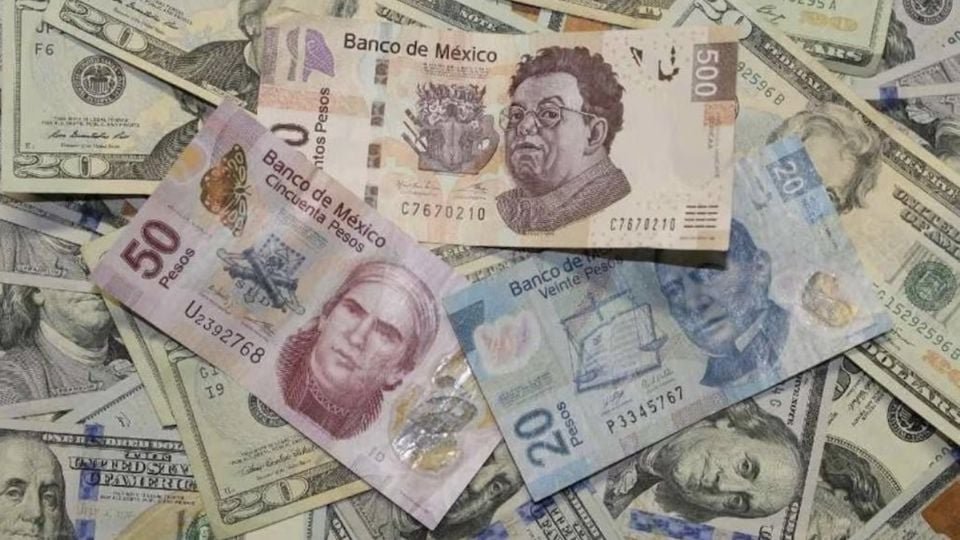
Mexican families have stopped receiving remittances from the United States, with the largest decline reported since 2009. During the first 10 months of the year, remittances totaled $51.344 billion, a drop of 5.1% compared to the same period in 2024. Banco Base reported a decrease of 7 million transactions, meaning Mexicans have stopped receiving resources from abroad.
Between January and October of this year, remittances amounted to $51,344.3 million, a decrease of 5.1% compared to the same period in 2024, according to the Bank of Mexico (Banxico).
It should be noted that remittance sending has experienced seven months of annual contractions, showing significant deterioration compared to 2024.
“This is the first annual decline for an equal period since 2013 (-1.90%) and the largest for an equal period since 2009 (-15.82%),” Banco Base highlighted.
Mexicans Stop Receiving Remittances
“The reason for the weakness of remittances on an annual basis continues to be primarily associated with a decline in the number of remittance transactions,” Base noted.
In the first 10 months of 2025, there were 130 million remittance transactions, a decrease of 5.15% compared to the same period in 2024.
“The decline in remittances so far this year implies 7.06 million fewer transactions compared to the first ten months of 2024, meaning many people in Mexico who received remittances last year have stopped receiving them in 2025, and the number continues to grow,” Base reported.
According to BBVA Research, the decline in remittances affects thousands of Mexicans, as they are essential for thousands of households. According to data, remittances for thousands of families make the difference between being able to purchase the basic food basket or falling into severe deprivation.
“For almost half a million people in Mexico, remittances contribute to their households having sufficient income to purchase the food basket and not be in extreme poverty,” the bank stated.
The estimated decline by the bank would be the first since 2013, when remittances fell 3.75%, and the largest since 2009 when remittances contracted 15.7%, according to data from the Bank of Mexico (Banxico).
According to Carlos Serrano Herrera, chief economist of the BBVA financial group, the U.S. labor market is weakening due to Trump’s macroeconomic policies, and until a rebound is seen, there will be no recovery in remittance sending.
Banxico data shows that in the tenth month of the year, remittances averaged $403, while the accumulated amount for the year is $395.
According to the financial group’s analysis, for 2026 it is possible that remittances will continue to show a decreasing trend, although they will remain very important for the economy of millions of households in Mexico, with an amount close to $60 billion.
In October They Fell 1.6%
Only in October, remittances from abroad totaled 5.634 billion pesos, which was 1.6% less compared to the same month of the previous year, when 5.730 billion pesos were sent.
Context: More than 90% of remittance income comes from the United States, so the decline in the flow of remittances is due to Donald Trump’s immigration policies and the economic slowdown of the northern neighbor.
Weakness in the US Labor Market
Siller indicated that the U.S. labor market remains weak, which limits the growth of remittances.
Between January and September, 684,000 job positions were created, 50.58% less than the same period in 2024 and the lowest job creation for an equal period since 2020. Likewise, in the first ten months of 2025, employment of people of Mexican origin over 16 years old grew by 612,000 positions according to unadjusted series.
The analyst specified that this represents job creation 24.35% below what was created in the same months of 2024 and the lowest number of new jobs since 2021.
Discover more from Riviera Maya News & Events
Subscribe to get the latest posts sent to your email.