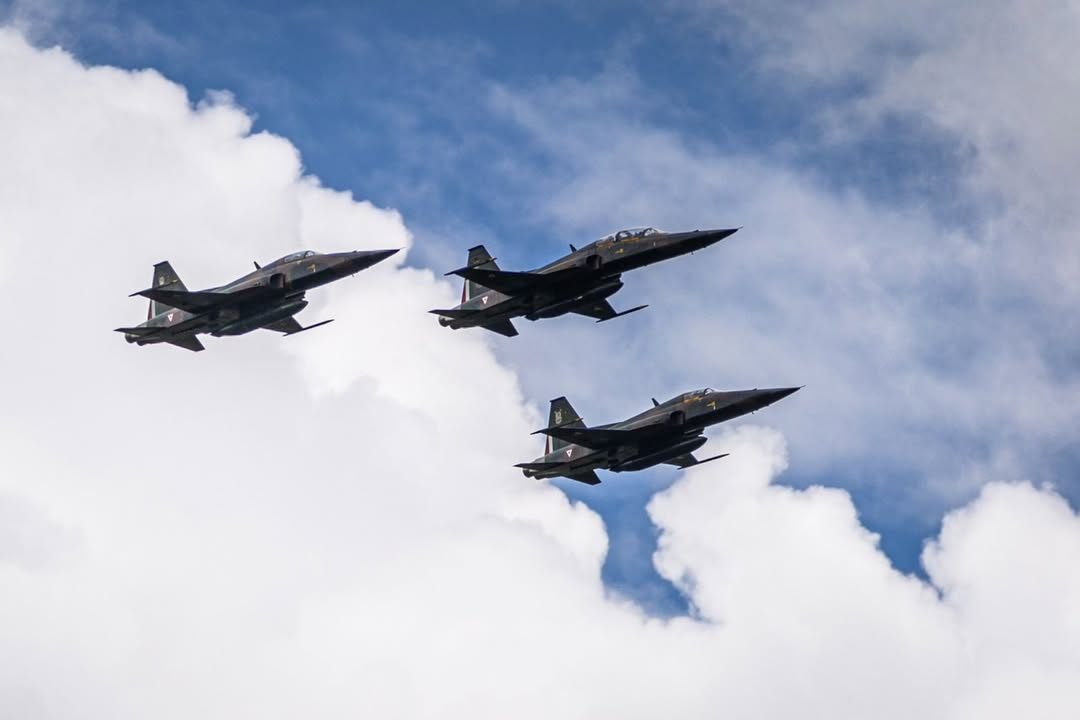
Mexico City — Recent online claims suggesting that Mexican airspace has entered a “war phase” following actions by U.S. and Mexican authorities are not supported by official aviation or defense sources, according to publicly available information from the Federal Aviation Administration (FAA), Mexico’s Secretariat of National Defense (SEDENA), and international aviation monitors.
What has occurred is the issuance of a Notice to Air Missions (NOTAM) by the U.S. Federal Aviation Administration advising civilian pilots to exercise heightened caution when operating in certain areas of Mexican airspace. FAA NOTAMs of this type are routine risk advisories, commonly issued worldwide in response to security concerns, military exercises, airspace congestion, or localized navigation anomalies.
No Evidence of Electronic Warfare or Airspace Closure
Contrary to viral reports, the FAA has not declared Mexican airspace unsafe, nor has it ordered airlines to suspend flights. There is also no confirmation from the FAA, NATO, ICAO, or aviation safety trackers that the United States is conducting electronic warfare operations—such as GPS jamming or radar interference—over Mexico.
Aviation experts note that references to “possible interference with navigation systems” in NOTAM language typically reflect precautionary risk assessment, not confirmation of hostile activity. Similar advisories are frequently issued for regions experiencing military drills, infrastructure testing, or temporary signal irregularities.
Mexican Military Flights Are Routine, Not Combat Operations
SEDENA has not announced any emergency activation of air defense systems. The presence of Beechcraft T‑6C+ Texan II aircraft, operated by the Mexican Air Force, reflects standard patrol, training, and surveillance activity, particularly in response to organized crime, airspace violations, or national security monitoring.
These aircraft are widely used across NATO and Latin American air forces and are not deployed to intercept U.S. military aircraft, as some social media posts have claimed. No U.S. drones, fighter jets, or reconnaissance aircraft have been reported operating in Mexican sovereign airspace.
No Impact on Commercial Aviation or Tourism
As of publication, commercial flights into and within Mexico continue normally, including in major tourism hubs such as Cancún, Playa del Carmen, Tulum, and Los Cabos. Airlines have not announced reroutes, cancellations, or service reductions linked to the FAA advisory.
Tourism authorities and airport operators in Quintana Roo confirmed that no restrictions or disruptions are in effect.
Aviation analysts caution against misinterpreting NOTAMs as indicators of conflict. While heightened security language can sound alarming, it does not equate to militarization or loss of airspace control.
“There is no evidence of an airspace conflict between Mexico and the United States,” said one international aviation safety consultant familiar with FAA procedures. “What we are seeing is standard risk communication, not escalation.”
Bottom Line
There is no war in Mexican skies, no airspace blockade, and no confirmed threat to commercial aviation. Flights remain safe, regulated, and operational. Claims suggesting otherwise stem from misinterpretation—and amplification—of routine aviation advisories.
For travelers and residents alike, the message from aviation authorities remains clear: stay informed, not alarmed.
Discover more from Riviera Maya News & Events
Subscribe to get the latest posts sent to your email.