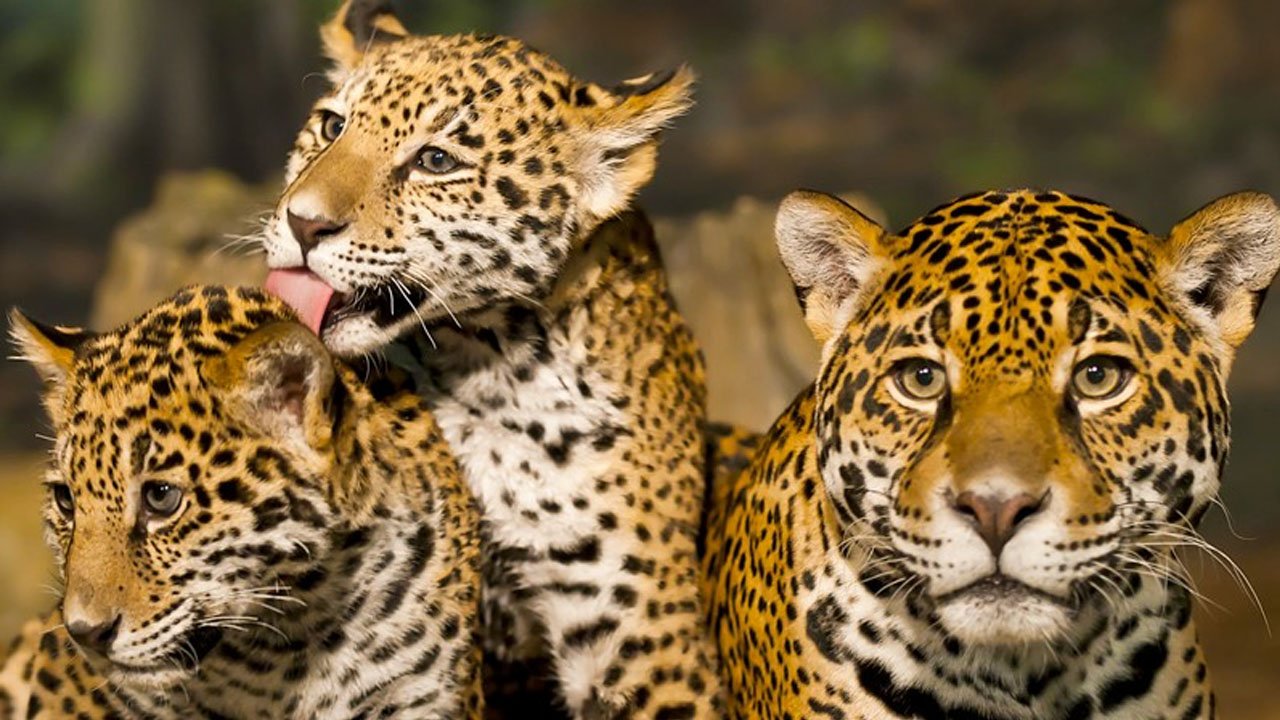
Mexico City — Jaguars have lost more than half their historic range in Mexico due to human development, habitat fragmentation, and population isolation, according to a new book published by the Universidad Intercultural del Estado de México.
The volume, titled El jaguar en México. Patrimonio ambiental y sociocultural and reviewed by the newspaper La Jornada, warns that the species is in a critical state with one of the lowest genetic diversities across its entire distribution. It calls for urgent habitat restoration to ensure the jaguar’s survival.
Compiled by 44 specialists in various fields of jaguar research, the book serves as an unprecedented collection of the most relevant studies conducted in Mexico. The three coordinators—Mario César Lavariega Nolasco, Rosa Elena Galindo Aguilar, and Dulce María Ávila Nájera—describe it as a tool for defending and conserving the species.
The editorial project originated from a talk by Lavariega Nolasco at a researchers’ meeting in Mexico City. “I had a very good database with over 250 entries on the current jaguar panorama, and I started breaking it down and drafting some texts, thinking about a scientific publication,” he said.
After sharing these writings with Galindo Aguilar and producing 60 pages—a substantial length for a scientific manuscript—the authors realized a book would be more appropriate. Dulce María Ávila Nájera later joined the team.
The result is a 348-page volume organized into 21 chapters across six sections: Biology, Spatial Dimension, Ecology, Jaguar-Human Interaction, Border and Strategic Conservation Situation, and Cultural Dimension. It also includes a bibliography, a directory of cited experts, and credits.
“In addition to gathering the ecological and interaction aspects, we decided to add the social perspective: how communities have integrated into studies to conserve the species; that approach is very valuable to me,” said Ávila Nájera.
She highlighted the Cultural Dimension section, particularly the chapter El jaguar, literatura y arte, which explores myths and legends portraying the jaguar as a symbol of power, fertility, and death, as well as its central presence in Olmec, Maya, and Mexica cultures, depicted in murals, codices, incense burners, and pottery.
For Lavariega Nolasco, one of the book’s major achievements is including voices from specialists across various regions of the country, from San Luis Potosí and Guerrero to Sinaloa, all with extensive experience studying this feline.
Galindo Aguilar emphasized that compiling this volume also helped identify persistent gaps in knowledge about the species. She noted that little is known about local perceptions and uses of jaguars in rural and indigenous communities. “There are articles that analyze mammals in general, and thus jaguars, but there is no exhaustive review,” she said.
She added that while regions like the Yucatan Peninsula have been widely studied, others remain underexplored. “There are significant efforts in Guerrero and Oaxaca, but the same is not true for Veracruz or Hidalgo, where despite high deforestation levels, sightings have occurred.”
Among the compiled data raising alarms, a report from the World Wildlife Fund (WWF) warns of trafficking of jaguar parts or individuals on Mexico’s southern border, as well as hunting out of fear or subsistence by ranchers who share habitats with the animals.
“Sometimes there are few prey for jaguars in the forest, and it becomes very practical for them to hunt cows, which brings them into conflict with local communities,” Lavariega Nolasco pointed out.
Written in clear, accessible language free of technical jargon, the book targets the general public, making it suitable for high school and undergraduate students, science communicators, and researchers.
“One of the book’s most important contributions is that it addresses the jaguar as an umbrella species, key to preserving entire ecosystems,” the authors stressed, agreeing that conservation will only be possible if science, public policies, and communities work together.
El jaguar en México. Patrimonio ambiental y sociocultural was published by the Universidad Intercultural del Estado de México in collaboration with the Instituto Politécnico Nacional (IPN), the Centro Interdisciplinario de Investigación para el Desarrollo Integral Regional Unidad Oaxaca (CIIDI-Oaxaca), and the Secretaría de Ciencia, Humanidades, Tecnología e Innovación.
Discover more from Riviera Maya News & Events
Subscribe to get the latest posts sent to your email.