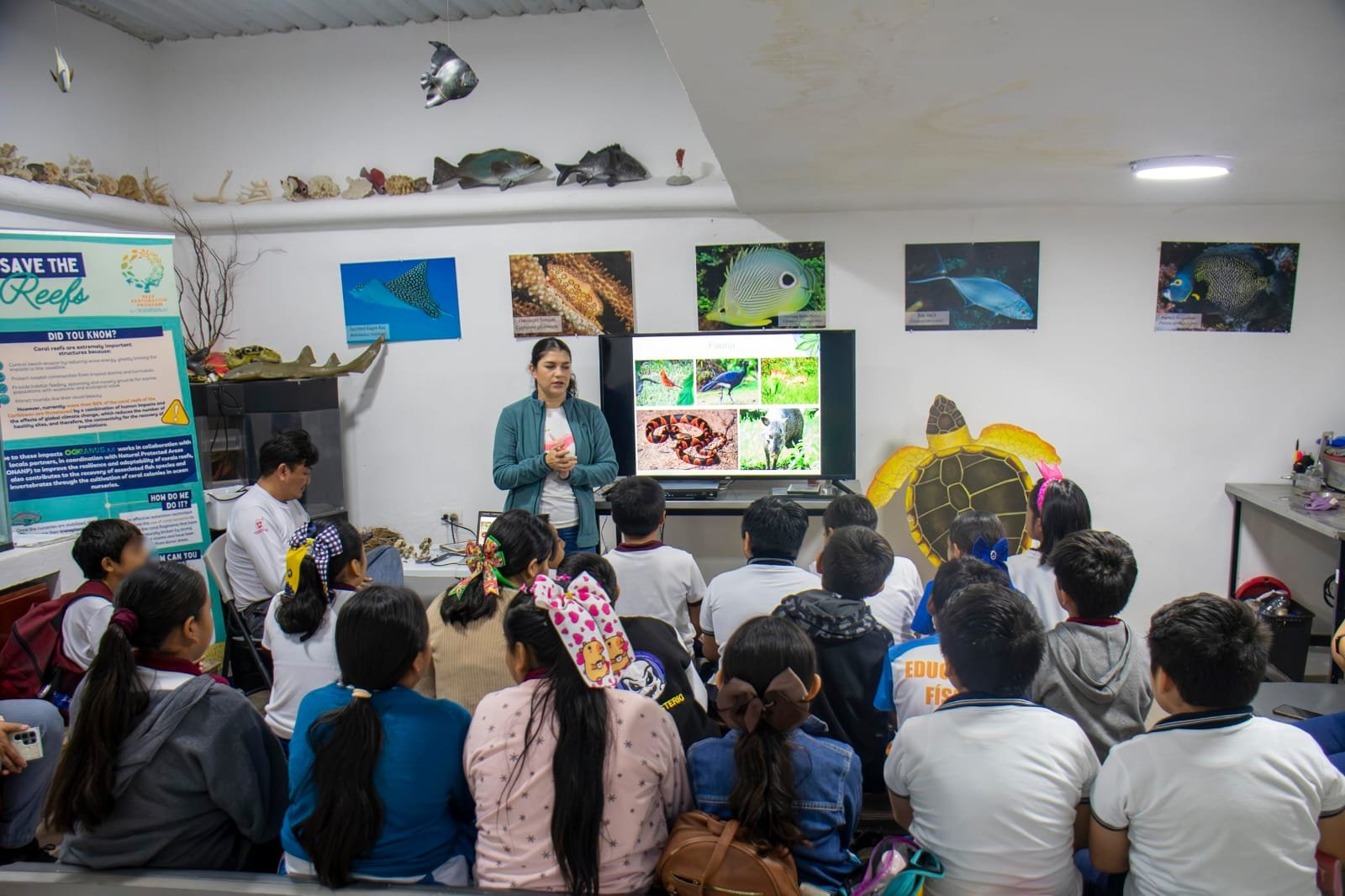
Cozumel — On an island renowned for its extraordinary biodiversity, conservation is not only an institutional responsibility but a cause that engages the entire community. Under this premise and in the context of National Conservation Day, the Cozumel Parks and Museums Foundation (FPMC) delivered an environmental talk to students at Leona Vicario primary school, aiming to introduce them to the island’s natural wealth and raise awareness about the importance of protecting it.
The activity took place at the Coral Laboratory of the Conservation and Environmental Education Center (CCEA), a space where students were able to learn firsthand about the programs that FPMC promotes to safeguard local ecosystems. From bird monitoring to sea turtle conservation, the students discovered the scientific and community work that supports Cozumel’s natural heritage.
FPMC General Director Juanita Alonso Marrufo emphasized that environmental education is an essential element within the New Agreement for Well-being and Development of Quintana Roo, promoted by Governor Mara Lezama Espinosa. This model fosters social participation, conservation, and sustainability as the foundation for building a healthier and more just future for all.
During the session, Paulina Sabido Villanueva, head of the Office of the Directorate of Conservation and Environmental Education (CEA), explained to the students the importance of Bird Monitoring, highlighting the fundamental role that both resident and migratory species play in pollination, seed dispersal, and the island’s ecological balance.
Later, biologist Ricardo Peralta Muñoz, in charge of the Punta Sur Turtle Camp, presented the characteristics and conservation status of the two species of sea turtles that nest in Cozumel: the green turtle (Chelonia mydas) and the loggerhead turtle (Caretta caretta), both endangered. He underscored the challenges they face due to natural and human threats and the importance of protecting their life cycles.
Finally, the students learned about the actions that FPMC carries out for the protection of these emblematic chelonians, including nest monitoring and marking, beach cleanups, scientific data recording, and the use of geolocation tools, efforts that reflect the institution’s ongoing commitment to biodiversity conservation and the formation of an environmentally responsible citizenry.
Discover more from Riviera Maya News & Events
Subscribe to get the latest posts sent to your email.