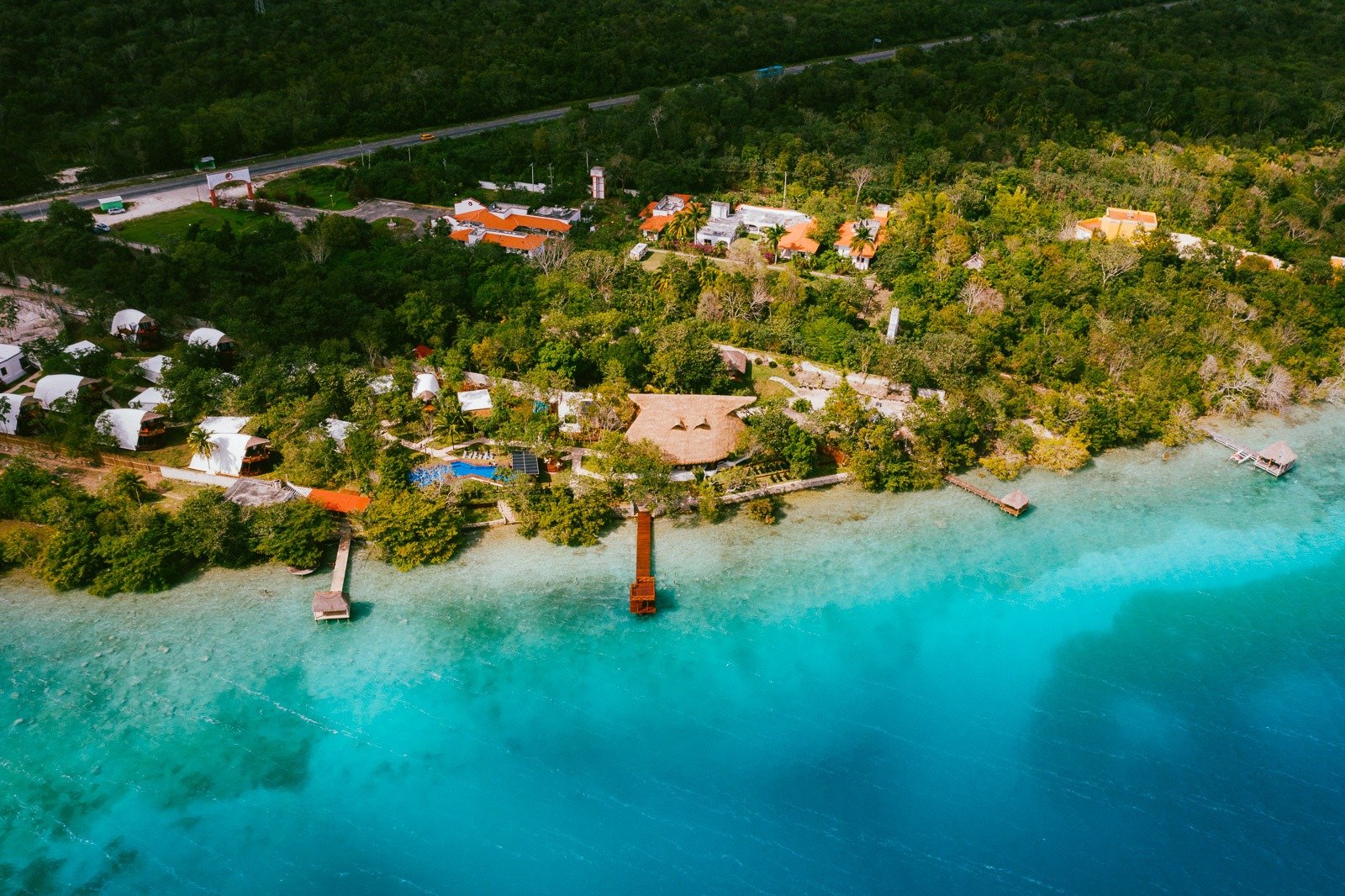
BACALAR, MX. The Federal Government has informed the municipal government of Bacalar, led by Mayor José Alfredo Contreras Méndez, that the agreement for the formulation, approval, issuance, execution, evaluation, and modification of the Local Participatory Ecological Zoning Program (Poel) is now ready.
The objective is to establish the bases for implementing the Poel in Bacalar. The agreement is signed by the Federal Executive through the Ministry of Environment and Natural Resources (Semarnat), the Subsecretariat of Biodiversity and Environmental Restoration, the General Directorate of Forest Management, Soils, and Ecological Zoning (Insus), and the National Commission of Natural Protected Areas (Cnanp).
In the agreement, the State Government was represented by Óscar Alberto Rébora Aguilera, Secretary of Ecology and Environment (Sema), and the municipality of Bacalar by José Alfredo Contreras Méndez, who was assisted by Guillermo Arturo Tun Ruiz, Secretary General of the City Council.
Both the Federal Government and the Municipal Government declare that it is their will to sign the agreement to establish the bases, mechanisms, and commitments of each party for the evaluation, modification, updating, issuance, execution, and follow-up of the Program. This program will cover the entire municipal territory and serve as the guiding instrument to sustainably orient land use, human settlements, productive activities, and natural resource utilization within the municipal territory.
This Poel arrives at a time when pollution in Bacalar’s Seven Colors Lagoon has reached alarming levels, along with the devastation of the low jungle by Mennonite groups and the conservation of natural protected areas within the municipal geography.
The purpose is to integrally and jointly coordinate the model that supports the Program, including environmental management units (Ugas), land uses, ecological guidelines, ecological regulation criteria, and applicable ecological strategies. This will be in accordance with the General Law of Ecological Equilibrium and Environmental Protection (Lgeepa), its Regulation on Ecological Zoning, and other applicable provisions. Additionally, an Environmental Logbook will be implemented to allow for permanent and systematic evaluation of the Ecological Zoning Process, which can only include information that the parties have defined as public under the General Law of Transparency and Access to Public Information.
Finally, to carry out this program, the participating parties must form a committee with mechanisms of social, sectoral, and institutional representation related to land uses regulated by legal instruments in the areas of human settlements and ecology. This committee must have regulations ensuring plural and constant participation.
The committee must include representatives from the three levels of government and representative, inclusive, and effective participation from actors, organizations, indigenous communities, agrarian communities, and other social, private, and academic sectors with legitimate social, cultural, economic, or environmental interests in the territory. These members will be permanent participants in this planning instance, and guest members may also be considered. The integration and participation of women, young people, local Afro-descendants, and vulnerable groups will be promoted and prioritized.
Discover more from Riviera Maya News & Events
Subscribe to get the latest posts sent to your email.