Mexico City — Fake news spreads nearly 1,000% faster than fact-checking efforts can counter it, with Mexican drug cartels increasingly using digital disinformation as a terror strategy, an expert warned this week.
Grisel Salazar Rebolledo, a researcher at Universidad Iberoamericana’s Department of Social Science and Politics, said cartels exploit social media to sow panic, undermine government authority, and consolidate their power. The tactic surged after Mexican armed forces killed Nemesio Oseguera Cervantes, known as “El Mencho,” leader of the Jalisco New Generation Cartel (CJNG).
“This past weekend, we saw efforts to counter the wave of disinformation, but data shows that while valuable, the speed at which fake news circulates often exceeds verification efforts by almost a thousand percent,” Salazar said.
Following El Mencho’s death, social media flooded with alarming messages about attacks on civilians, along with out-of-context videos and photos—some created with artificial intelligence. One widely shared example falsely showed a plane on fire at Guadalajara’s airport.
Salazar explained that for organized crime, spreading false information is part of a strategy to paralyze cities and demonstrate territorial control. “We saw many people adopt a voluntary curfew—whether it was true or not, they decided not to leave their homes,” she said.
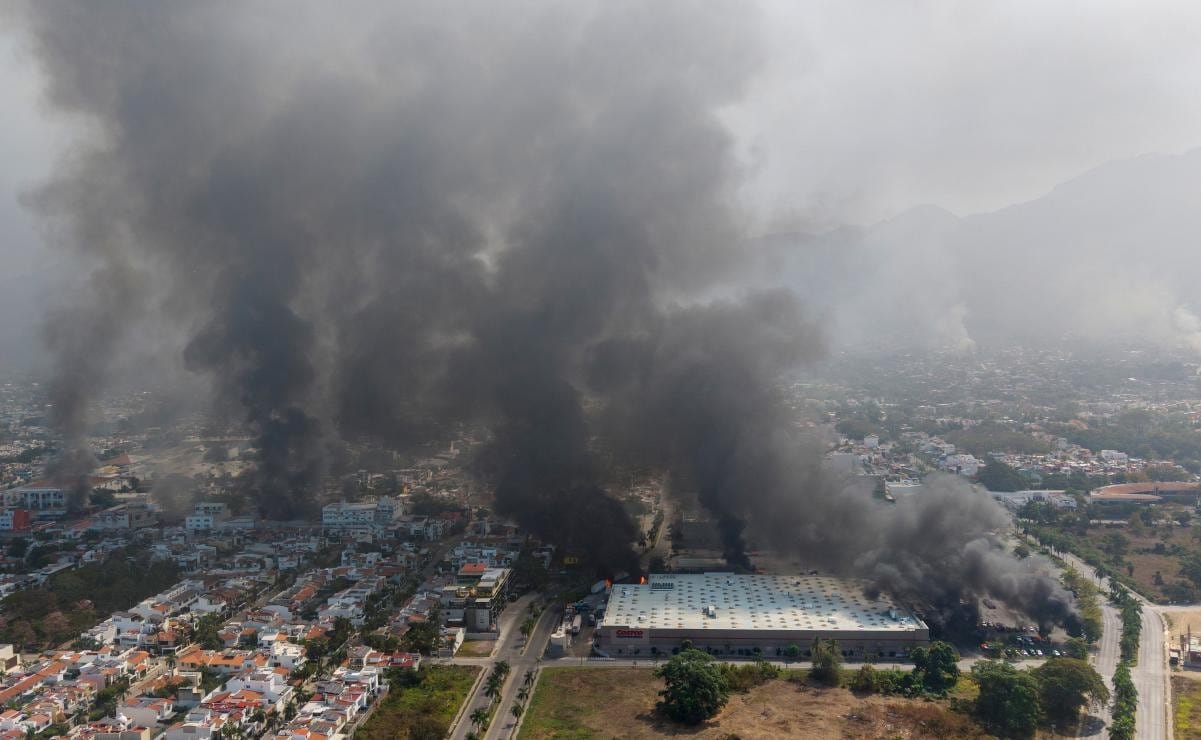
The violence triggered by El Mencho’s killing included approximately 252 blockades across 20 states, according to Mexico’s Security Cabinet. The Mexican Association of Insurance Institutions reported 631 stolen vehicles nationwide.
Salazar noted that social media offers cartels a free, massive platform for “positioning, even confrontation with the government.” She added, “Anyone with access to a computer or cellphone can create AI-generated photos and replicate graphics that look authentic. Given the low cost and reach, it’s a very effective strategy.”
This digital terror, she said, has two dimensions: it shows physical power on the ground and creates a narrative dimension used to instill fear where government responses may falter. “These messages demonstrate territorial power, power against the government, and power to impose terror—it’s very powerful for consolidating their dominance,” Salazar warned.
She also criticized news outlets that prioritize being first over verifying information during crises. “There’s shared responsibility. On one hand, we as users need to adopt media literacy strategies, but media must be responsible with what they publish in these moments, considering the ethical consequences,” Salazar asserted.
The recent wave of violence has been compared to the 2019 “Culiacanazo,” when the Mexican Army detained Ovidio “El Chapito” Guzmán of the Sinaloa Cartel, though that episode was largely confined to one state.
Discover more from Riviera Maya News & Events
Subscribe to get the latest posts sent to your email.