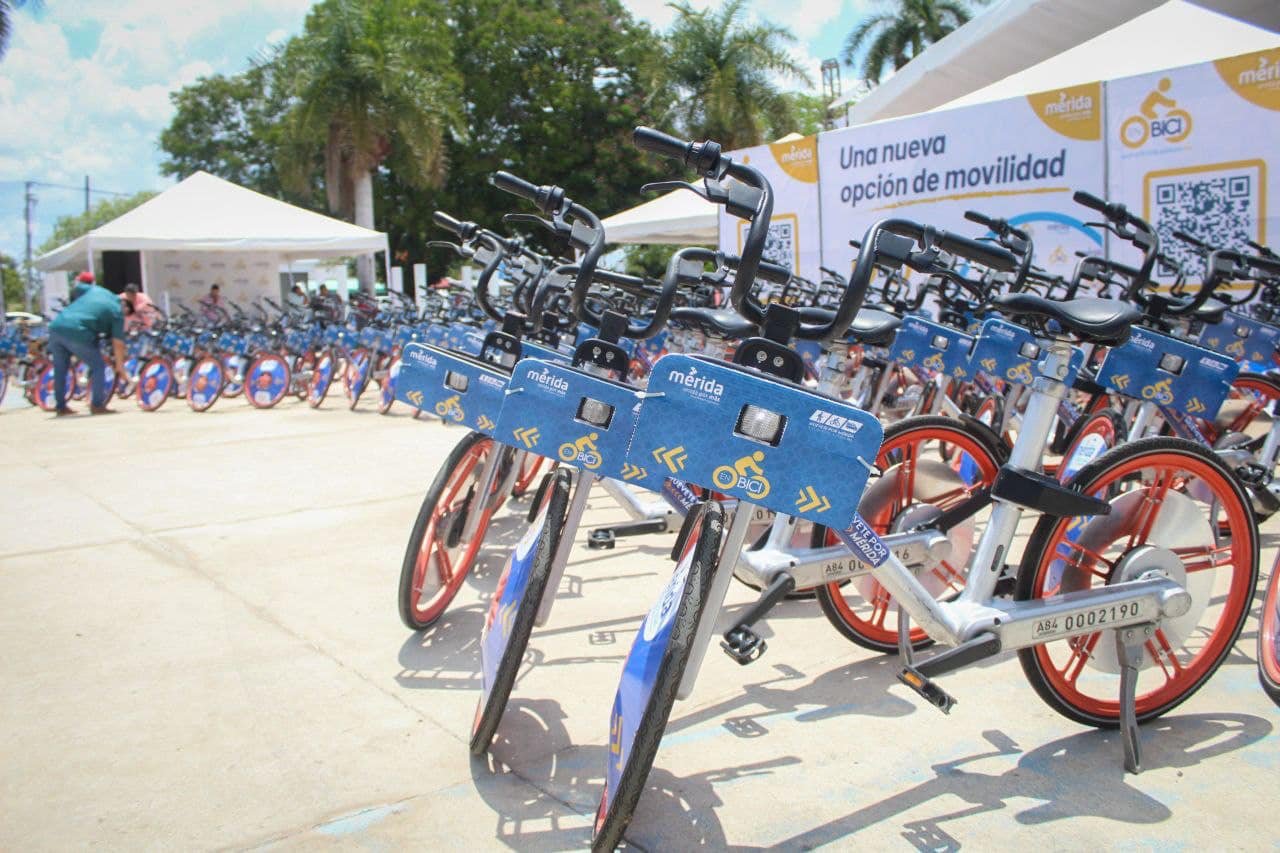
Mérida, Yucatán — A municipal bike-share program launched with fanfare in Mérida has become a costly failure, wasting millions of pesos due to poor planning and low usage, according to an investigation.
The En Bici program, implemented in May 2023, has left the city with nearly 10 million pesos in annual excess costs from leasing 300 bicycles that failed to meet projected usage levels. The system, which was presented as a modern, sustainable transportation alternative, operated with 53 stations primarily in the city center, east, and north.
Mérida Mayor Cecilia Patrón recently confirmed the city had to remove a significant number of unused bicycles. “We analyzed bicycle usage and made decisions based on that data,” Patrón said, adding the move would reduce the program’s operating costs by over 30% in 2026.
Documents obtained through Mexico’s National Transparency Platform reveal the Municipal Administration Department paid 2,735,419.02 pesos monthly—approximately 32.8 million pesos annually—for the program.
The program was launched during the administration of former Mayor Renán Barrera Concha, who leased the smart bicycles from company Mobike for over two and a half years. Officials didn’t conduct a “real usage analysis” until after that period, discovering the surplus that now requires operational adjustments.
At the official presentation, Barrera claimed the program would allow workers, students, and residents to travel faster, safer, and more ecologically, with connections to public transport and access via a mobile app. Then-Governor Mauricio Vila Dosal supported the initiative, saying cities should focus on people rather than cars.
However, mobility experts say the political rhetoric wasn’t backed by solid technical strategy. Everardo Flores Gómez, president of the Cicloturixes civil association, warned that public bike systems shouldn’t be evaluated solely on their existence but on indicators like population, daily unit rotation, number of trips, and integration with bike lanes and public transport.
“It’s likely the economic plan wasn’t done properly, and now they’re making cuts,” Flores Gómez explained, noting that lack of timely adjustments worsened the financial impact.
Station placement proved another critical flaw. Several were located in low-demand areas without proper connectivity, prioritizing urban visibility points aimed at tourism rather than students or workers. “When things aren’t done transparently, it can hurt future efforts,” Flores Gómez added.
Infrastructure neglect further undermined the program. Most bike lanes built in recent years are practically abandoned and don’t ensure safe, functional routes. Despite the city reporting 83.8 kilometers of bike lanes built between 2012 and 2023, lack of continuity and connection between routes reduced the program’s viability as a daily transportation option.
Many of the 300 public bicycles had mechanical issues, were heavy, lacked gears, and made trips over two kilometers difficult for users. “We’ve seen this on night rides—young people arrive with these bikes and move very slowly,” Flores Gómez said.
He noted that while Mobike likely arrived through a bidding process, the company has faced maintenance problems and lack of docking stations in other cities where it operates. The city should analyze other companies that could provide the service with easier-to-use bicycles, he suggested.
Flores Gómez acknowledged the program could have been eliminated for poor performance but credited the municipal administration for making adjustments to keep it operating. He emphasized that Mérida, with over one million residents, needs such public services to improve mobility and reduce commute times, but they must be implemented with rigorous technical analysis.
The program’s failure doesn’t invalidate bicycles as mobility tools, he concluded, but shows that without technical planning, constant evaluation, and willingness to correct errors, public resources can be wasted.
Regarding the 10 million pesos cut from the En Bici program, Mayor Patrón said the funds would be redirected to other areas like urban maintenance.
Discover more from Riviera Maya News & Events
Subscribe to get the latest posts sent to your email.