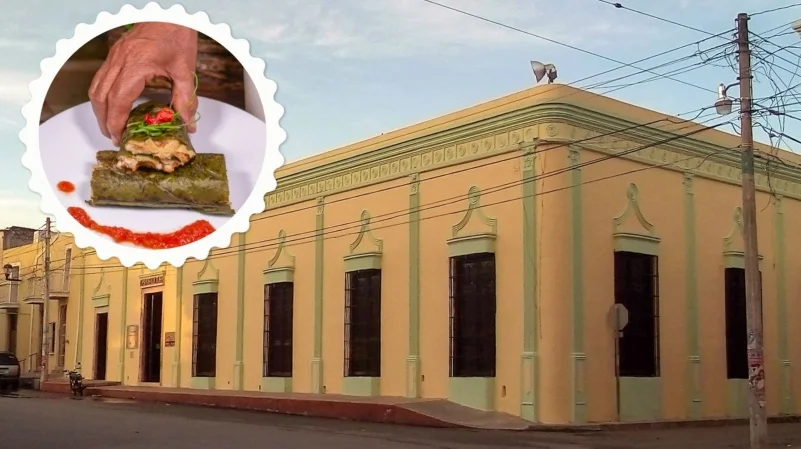
Espita, Yucatan — Nestled in eastern Yucatan, about 51 kilometers north of Valladolid and just over two hours from Merida, the Pueblo Magico of Espita offers travelers intact colonial architecture, cinematic cenotes, historic henequen haciendas, and a deep-rooted Mayan culinary heritage. Designated a Pueblo Magico in 2023 alongside Tekax and Motul, Espita has gained tourist attention while preserving its local essence, with cobblestone streets, stone houses, and a 17th-century baroque church creating a timeless atmosphere.
Colonial Heart and Historic Landmarks
The first landmark visitors encounter is the Church of San Jose, built by Franciscans in the early 17th century and reconstructed in the 18th century after a fire. Erected over a former Mayan ceremonial center, its sober, powerful style reflects the colonial practice of imposing new faiths on indigenous sacred sites. Facing the church, Melchor Ocampo Park serves as the town’s natural gathering spot, where locals socialize on Sundays. For photogenic history, the partially vegetated Old Railroad Station from 1888 stands as one of Espita’s most melancholic and picturesque corners.
Henequen Haciendas and Natural Treasures
Between 1860 and 1910, Yucatan thrived on henequen, known as “green gold,” with haciendas around Espita fueling global exports of its fibers. Hacienda Santa Teresa Kancaba, just 6 kilometers from the town center, remains a vivid testament to that era, offering tours of its historic facilities, access to a private cenote, and rural lodging. Post-Mexican Revolution land expropriations left most haciendas in ruins by 1930, making Kancaba’s preservation a patrimonial miracle.
Espita’s cenotes provide intimate, less crowded alternatives to popular sites along the Chichen Itza-Tulum corridor. Highlights include Cenote Hats-uts, accessible via Ya-axche Celestial Trails for swimming in clear waters; Cenote Dzonotoch, ideal for family visits; and the private cenote at Hacienda Kancaba, offering an exclusive, historically contextualized experience.
The Kots’ob Tamal: A Culinary Emblem
Espita’s standout experience is tasting the Kots’ob tamal, also known as xmakulan uaj, a dish unique to the town. Its name derives from the Mayan word k’ots’, meaning “to roll” or “to wrap,” with recipes passed down through generations among local women. The tamal features corn masa, ibes (tender white beans), ground pumpkin seeds, fresh chives, and habanero chili to taste, all wrapped in hoja santa leaf for a distinctive herbal aroma. It can be prepared four ways: boiled, fried, baked, or pib-style (buried in an earth oven, the most ancestral and ceremonial method).
Beyond the Kots’ob, Espita’s gastronomy includes must-try dishes like mondongo espiteño (tripe stew), pipian de venado (pre-Hispanic deer stew with pumpkin seeds and chili), cochinita pibil cooked in an earth oven, papadzules (tortillas in pumpkin seed sauce filled with hard-boiled egg), chaya with egg, Monday tradition frijol con puerco (beans with pork), and classic Yucatecan antojitos like panuchos and salbutes.
Where to Eat and How to Get There
For authentic Kots’ob, visit the municipal market stalls or the December Fair, where local women prepare them artisanally. Top-rated dining options include Casona Los Cedros for Mexican and Latin cuisine in a colonial setting, Cafe Estacion 1888 for artisanal coffee and snacks in the historic railroad building, Juicebar and Grill El Jardin for plant-based fusion, Restaurante Cocina de Humo for traditional Mexican techniques, and Restaurante Hacienda Ticuch for authentic Yucatecan cuisine in a rural environment.
To reach Espita, drive just over two hours from Merida via federal highway or toll road toward Valladolid, then north; from Valladolid, it’s under an hour north by road or taxi; and from Cancun, it’s about 2.5 hours via toll road to Valladolid, then onward to Espita. An alternative is taking the Tren Maya to Chichen Itza station and continuing by taxi.
Discover more from Riviera Maya News & Events
Subscribe to get the latest posts sent to your email.