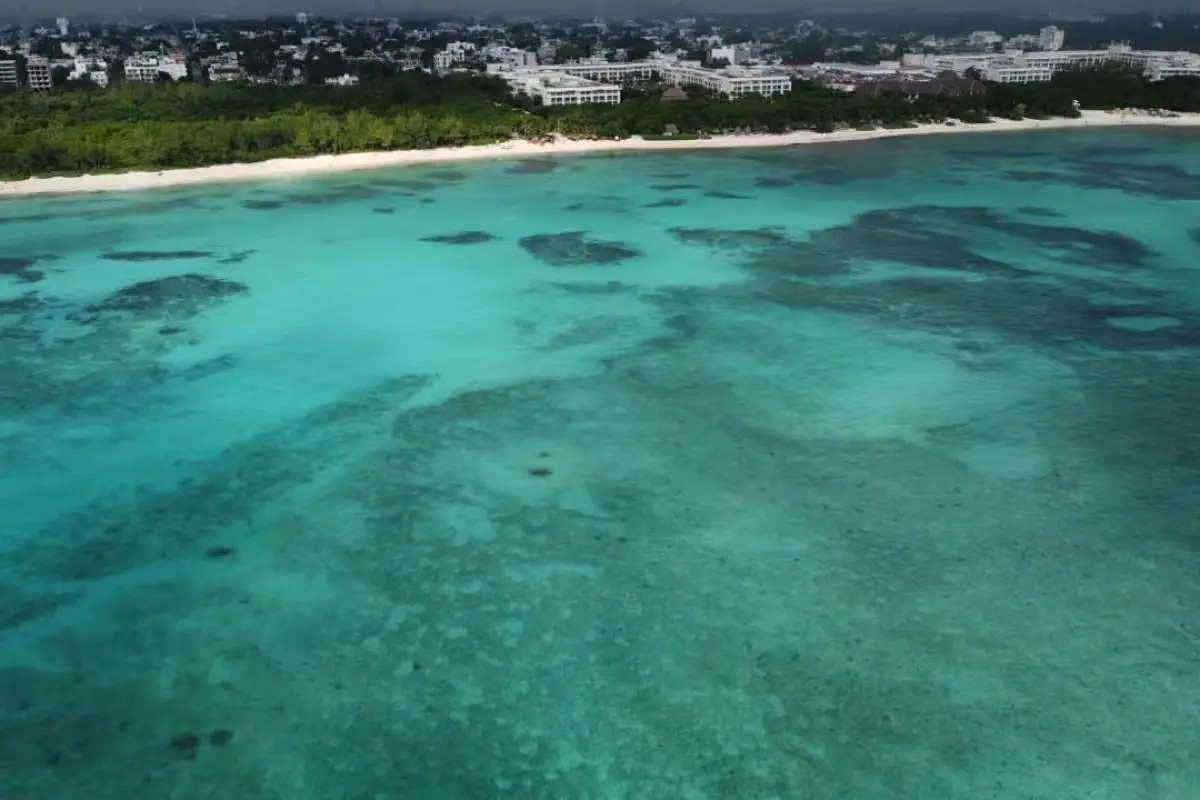
Playa del Carmen, Quintana Roo — An environmental activist is demanding authorities conduct an Environmental Impact Assessment (EIA) for sargassum barriers installed along the coast at Punta Esmeralda, warning the structures pose a high risk to marine life, particularly nesting sea turtles.
Activist Carlos Jiménez Arreola said the barriers, designed to stop sargassum seaweed from reaching shore, were installed without proper studies or monitoring in an area known as a turtle nesting and arrival zone. He warned the lack of assessment threatens local wildlife.
“The government must have an EIA that guarantees safety for the specimens,” Jiménez said, noting that beaches 72, 88 and Punta Esmeralda are recognized nesting sites. He emphasized that simply placing the devices isn’t enough without proper environmental safeguards.
Jiménez reported that in 2025 alone, more than 15 turtle nests in the area couldn’t be adequately protected or conserved due to the daily arrival of sargassum at beach 72. He fears the new barriers could further complicate conservation efforts.
The activist, who has conducted ongoing monitoring of biodiversity along this coastal strip, said he’s documented dolphins and other marine animals seeking food in the area. He expressed concern that municipal and federal environmental authorities haven’t consulted experts, jeopardizing turtle safety.
Jiménez explained that containment systems can pose multiple dangers: turtles can become entangled, their access to nesting sites can be blocked, or their habitats can be altered. The specific impact depends on the design and management of the barriers, making maritime studies essential to prevent threats.
“The risk is that they get trapped trying to reach the shore,” he said. “Mainly hatchlings can get stuck in the nets or structures.”
While the barriers stop sargassum, Jiménez noted they also prevent female turtles from accessing sandy areas to nest. Additionally, accumulated seaweed can make it difficult for newborns to reach the ocean, increasing risks of dehydration and predation.
Jiménez called for constant supervision of the installations to avoid disrupting coastal ecosystems and urged authorities to implement mitigation measures. He recommended permanent monitoring by biologists to free any trapped specimens and ensure wildlife protection before the next nesting season.
Discover more from Riviera Maya News & Events
Subscribe to get the latest posts sent to your email.