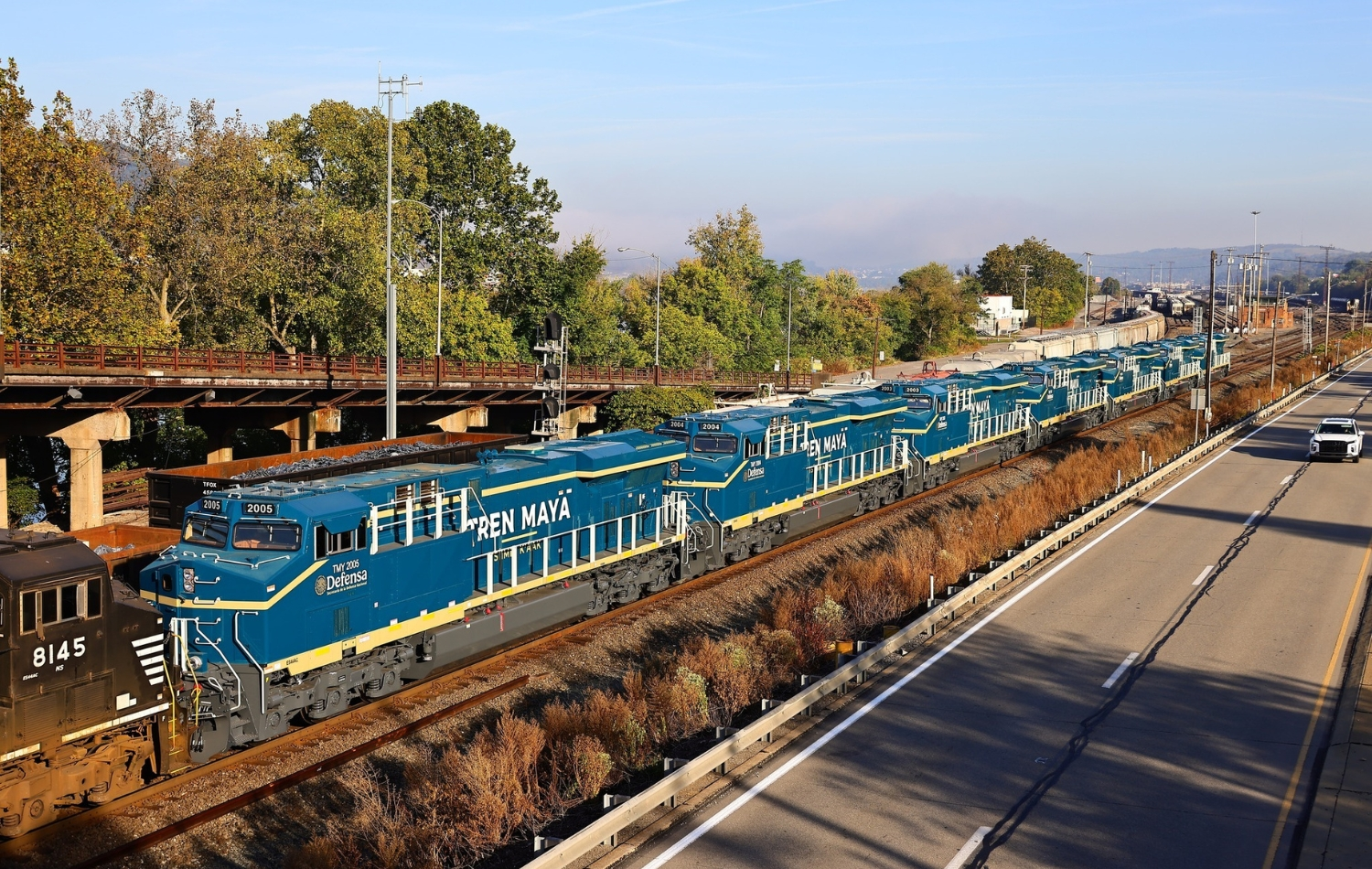
Cancún, Quintana Roo — Environmental groups are calling on the federal government to reconsider plans to operate cargo trains on the same route as the Maya Train, following viral video evidence showing the passenger rail line’s structure sinking and requiring reinforcement.
The environmental organization Sélvame del Tren issued the warning after footage emerged showing workers shoring up sections of the Maya Train where the karst soil beneath has begun to subside.
Guillermo D’ Christy, a prominent voice within the organization, had warned long before the first signs of sinking appeared that the train project posed a latent risk to both the jungle and the aquifer running beneath the tracks.
He explained that the karst soil intended to support trains loaded with fuel cannot withstand such structures, as sinkholes form constantly even without additional weight beyond the calcium that constitutes most of the subsurface in this area.
“Driving pilings 25 meters deep doesn’t mean there can’t be another cavity below that soil that could eventually collapse,” the activist said in 2023 during the installation of pilings that are now being reinforced to prevent collapse. “This is how cenotes form—when cave roofs collapse under their own weight.”
Despite military engineers announcing that pilings at 25-meter depths would enable train construction, D’ Christy said current soil conditions demonstrate the terrain is unsuitable for supporting a passenger train, let alone a cargo train, due to the risk of contaminating the entire aquifer in case of an accident.
Time Bomb
What has been revealed so far is that the federal government is investing 7.777 billion pesos in constructing a multimodal cargo terminal in Cancún, according to the Environmental Impact Statement already submitted for authorization to the Secretariat of Environment and Natural Resources.
The project will cover 261 hectares of land owned by the Quintana Roo government, of which 259.5 hectares require removal of medium sub-perennial rainforest vegetation for project construction, according to the statement.
It will be located at kilometer 841 of the Maya Train route, 8 kilometers east toward Cancún International Airport.
Also announced is the construction in Cancún of a 14-kilometer jet fuel pipeline with pump and control rooms, three storage tanks, and loading facilities for jet fuel, gasoline, and diesel.
The federal government has indicated this infrastructure will allow fueling Cancún’s airport storage system—the country’s second busiest—directly from train container cars.
Additionally, authorities plan to supply fuel to Quintana Roo via the Maya Train.
During President Claudia Sheinbaum’s morning conference on December 30, 2024, Commander Ricardo Vallejo of the Felipe Ángeles engineering group stated that Puerto Progreso in Yucatán, the Yucatan Peninsula’s main cargo port, is already saturated. Through this port moves everything from fuel to bulk materials for cement plants and even all beer production from northern Mexico to southeastern Mexico and abroad.
“That creates many bottlenecks and overcosts,” Vallejo said. “The Maya Train ring, connected to the Trans-Isthmus corridor and national railway network, will allow bringing fuel cargo from the country’s center, from our refineries, even from the north, also cement… which previously had to come through the port.”
The cargo component, he said, will make the Maya Train highly profitable, as no current cargo system “rings” or links the entire peninsula for fuel distribution or any other type of merchandise.
Discover more from Riviera Maya News & Events
Subscribe to get the latest posts sent to your email.