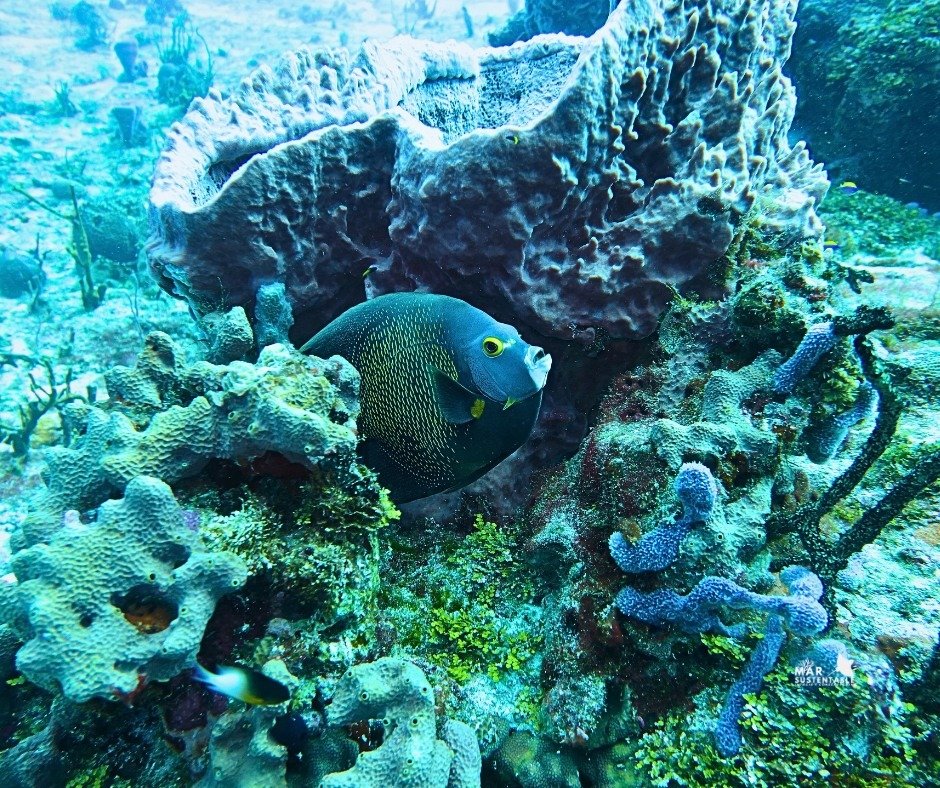
Cozumel, Mexico — Coral reefs are among the ecosystems most vulnerable to environmental disturbances, representing valuable resources and benefits for the population in Cozumel and improving their quality of life, stated the founders of “Prodeses,” Saul Isaias Navarrete Vazquez and Rodrigo Jesus Ojeda Rodriguez.
These benefits include tourist attraction, a source of food, and coastal protection against storms and hurricanes. The reef is so important that conserving it has an annual value for tourists of 5.5 billion pesos.
In that context, the founders of the company Prodese expressed that the objective is the restoration of the reefs of Villa Blanca, which are outside the conservation area of “El Cielo”; for this, they will use “Reef Balls” structures, as coastal municipalities in Yucatan have done.
“The results we expect for Cozumel are to accelerate the recovery of areas that regenerate on their own, demonstrate high resistance in climatological events, and add value, because we want to restore life, generating life and generating economic spillover as added value with this type of action; they are an example of how they attract fish,” explained biologist Rodrigo Ojeda.
For his part, biologist Saul Navarrete added that this is a project they have been developing for months, and in which they seek the conservation of natural resources throughout the Yucatan Peninsula, with the collaboration of different sectors of society, as well as generating alliances, the idea, and working with the media.
He revealed that the company Reef Balls Foundation, which has over eight thousand projects worldwide, builds structures designed with a patented formula.
“This is very important, even though they look like stone and concrete is usually a very different formula, the Reef Balls Foundation holds the patent for both the structure and the formula, which offers a pH very similar to marine pH, meaning it does not harm the marine environment; on the contrary, having a pH that replicates the formula, the consistency, and the chemical composition of a coral reef and, in turn, its shape, speaking in physical terms, provides a perfect refuge for the species in the area,” he explained.
Ojeda Rodriguez elaborated that the structure of the Reef Balls allows fish to make their habitat, while marine algae that serve as food grow; when other fish detect a “food bank,” they come to eat the fish that live there.
For the installation of the circular structures, they will have the support of cranes and the experience of fishermen and tourist service providers; they will then be placed in strategic locations, in such a way that locals have a sense of ownership for the conservation of the reefs.
The main damages that Cozumel suffered from Hurricane Wilma in 2005 were a devastating loss in several areas, and it also affected coral colonies and marine flora.
“Because a natural habitat for many species to develop was lost, we consider that the placement of structures is a key tool in the restoration of the reefs,” they concluded.
It is worth mentioning that among the threats to Cozumel’s reefs are the overexploitation of fishing resources, poor tourism practices, water pollution, coral diseases, and major storms.
The above has caused a decrease in ecologically important coral species, losing ecosystem services and increasing the vulnerability of the community to extreme meteorological events.
In addition, if the reef in the area degrades, it would cause an annual loss to the local economy of 1.51 billion pesos.
Discover more from Riviera Maya News & Events
Subscribe to get the latest posts sent to your email.