QUINTANA ROO — Cities in Quintana Roo are growing without structured planning or a balance between their economic capacity and the limits of natural resources, warned researcher Adán Caballero Vázquez of the Water Sciences Unit at the Center for Scientific Research of Yucatán (CICY).
CICY Alerts on Poor Water Management in the Peninsula
The academic also stated that, although the Yucatán Peninsula Basin still has sufficient water, the problem lies in the poor management of the resource. Furthermore, he explained that the current urban model uses water only once and then discards it, without efficient treatment or reuse systems, which interrupts the natural recharge cycle of the aquifer.
"The installed capacity for wastewater management is terrible," he stated.
This scheme, he said, reduces future availability and puts pressure on a system that is already showing signs of saturation. Caballero Vázquez also warned that urban development plans are not designed based on the real capacity of services, which leads to excessive and disordered growth that distributes the resource among an ever-increasing number of inhabitants.
He estimated that water stress could manifest between 2030 and 2050, depending on the intensity and frequency of drought periods.
Pressure on the Coastal Strip and Risk for the Aquifer
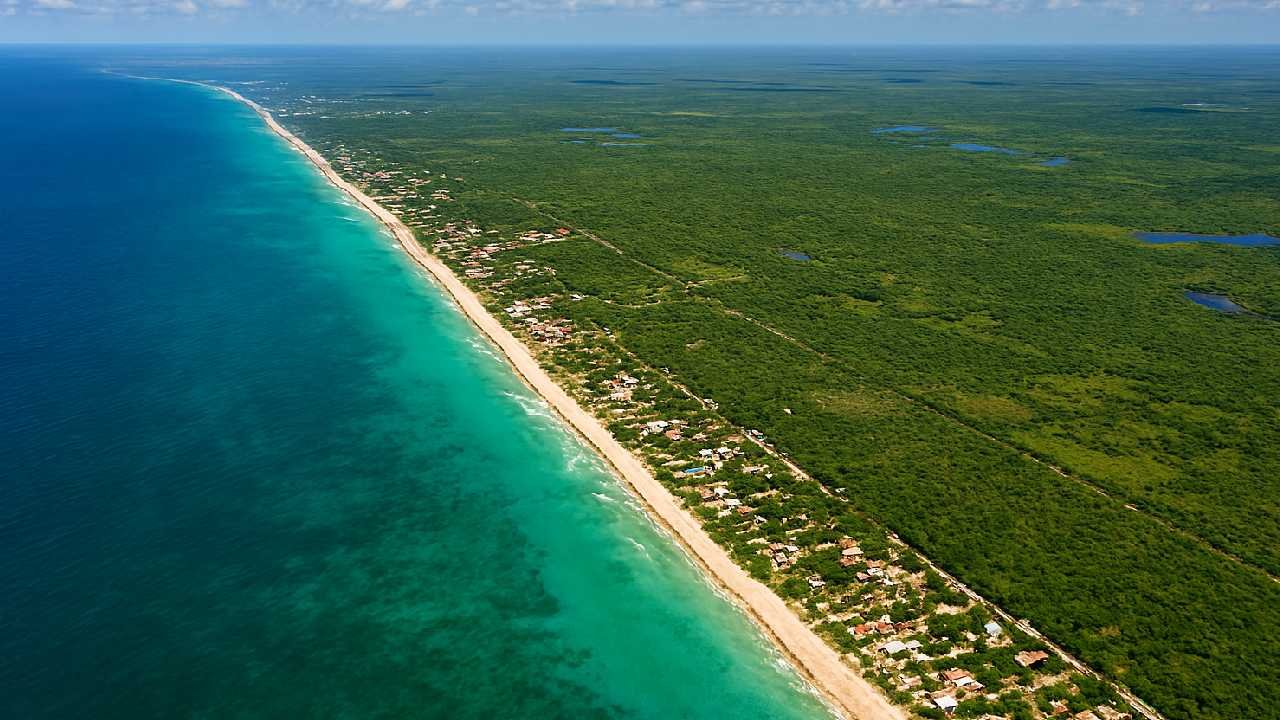
The researcher also alerted about the pressure on the coastal strip between Puerto Morelos and Tulum, one of the main recharge points for the state's aquifer. He considered it necessary to establish a hydrobiological reserve in the area, since the change in land use reduces infiltration and compromises the balance of the water system.
The intensive use of water for tourism activities, construction, and urban expansion has decreased the natural cleaning times of the aquifer, which deepens the vulnerability of the resource.
To this is added the lag in basic infrastructure. The Municipal Secretariat of Ecology and Urban Development of Cancún recognizes at least 50 housing developments without connection to the sanitary drainage system, although civil society organizations estimate more than 150 subdivisions in that condition.
Lagging Infrastructure, Pollution, and Loss of Environmental Balance
This lack of connection to the treatment system reflects an accumulated lag from several administrations and translates into contamination of the water table and damage to coastal ecosystems.
"When granting construction permits, precautionary measures must be applied in recharge zones; you cannot fill an area with buildings without reviewing the capacity of the services," stated Caballero Vázquez.
Finally, the specialist argued that the discourse of sustainable development in Quintana Roo contrasts with the reality: accelerated real estate expansion, intensive tourism, and deficiencies in drainage and wastewater treatment, which makes the aquifers—the state's main source of fresh water—the most vulnerable point of the economic model.
Discover more from Riviera Maya News & Events
Subscribe to get the latest posts sent to your email.