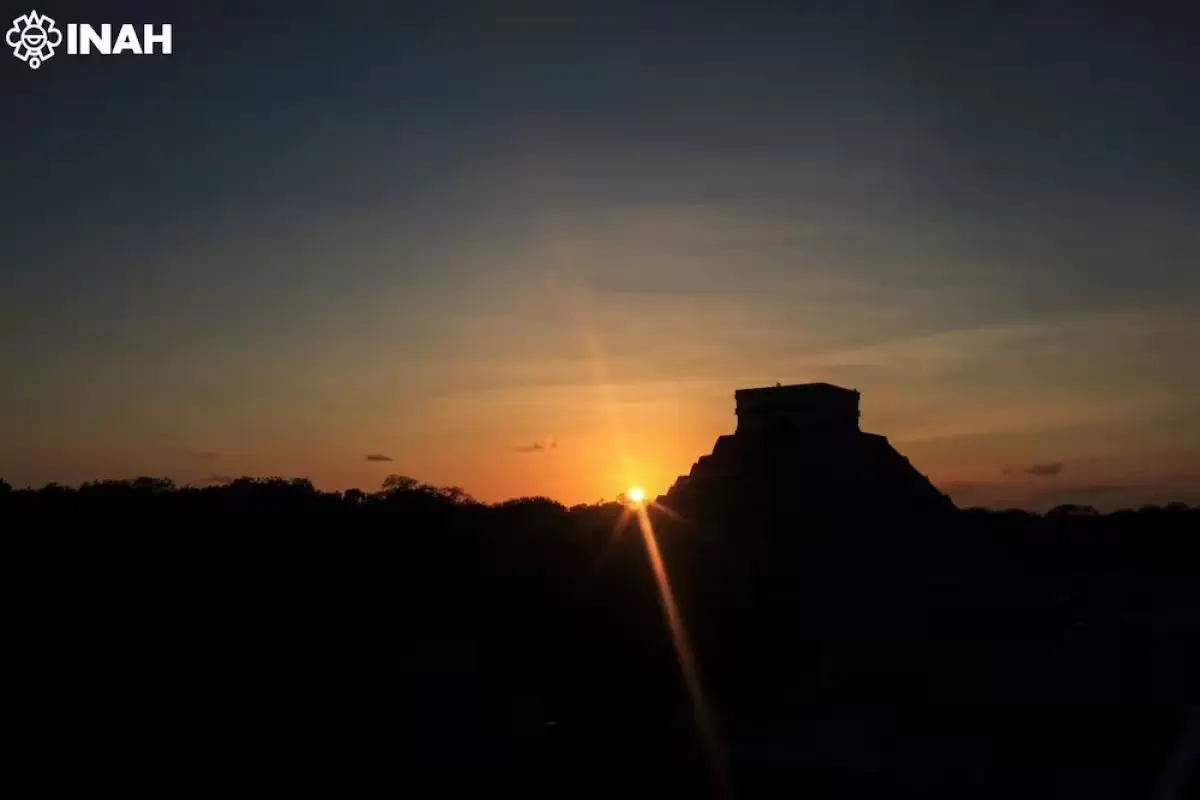
Chichén Itzá, Yucatán — The Chichén Itzá archaeological site is preparing to welcome thousands of visitors for the 2026 spring equinox, one of the most anticipated archaeoastronomical events of the year in Mexico’s Yucatán Peninsula. The phenomenon will be visible from Friday, March 20, through Sunday, March 22, when the ancient Maya city becomes a gathering point for domestic and international tourists.
Mexico’s Secretariat of Culture, through the National Institute of Anthropology and History (INAH), announced that a special operation is ready to ensure visitor safety and preserve the archaeological site. The equinox officially begins on March 20 at 8:46 a.m. Central Mexico Time, according to the National Institute of Astrophysics, Optics and Electronics, though the light and shadow spectacle can be observed on surrounding days.
During the phenomenon, seven triangles of light project onto the base of the Temple of Kukulcán, joining with the carved serpent head at the building’s base to create the illusion of a serpent descending the staircase. This effect is typically visible between 3:00 p.m. and 5:00 p.m. and drew over 32,000 visitors last year.
Opening Hours During the Equinox
On Friday, March 20, the archaeological zone will open at 9:00 a.m., with ticket booths and access points closing at 4:00 p.m. A full evacuation of the site will occur by 5:30 p.m.
For Saturday, March 21, and Sunday, March 22, opening time will start at 8:00 a.m. On both days, ticket booths and access points will also close at 4:00 p.m., with evacuation by 5:30 p.m.
The Great Museum of Chichén Itzá will remain open from 8:00 a.m. to 3:00 p.m. and can be visited from inside the archaeological zone, with access via the Sacred Cenote area.
Special Operation for the Equinox
The Spring Equinox Operation aims to protect this UNESCO World Heritage site, designated in 1988, and maintain order and security during the large influx of tourists.
The operation will coordinate with various agencies, including the Yucatán state government, the Cultur board, the state tax administration agency, the State Prosecutor’s Office, the National Migration Institute, the Mexican Red Cross, civil protection services, state police, and students from the Benito Juárez García University for Well-being.
During the event, restrictions will apply in some areas of the site. The last access to the Chichén Itzá Ball Court, the Osario, the Caracol (Chichén Itzá Observatory), the Nunnery Complex, and the Plaza of the Thousand Columns will be at 3:30 p.m., with evacuation at 4:00 p.m. to concentrate visitors in front of the Temple of Kukulcán.
What Visitors Cannot Bring into Chichén Itzá
Authorities announced that backpacks and bags will be inspected at entry points during the operation. Inflammable products, cigarettes of any type — including electronic ones — alcoholic beverages, or narcotics will not be permitted.
Access will also be prohibited with costumes, flags, commercial-branded tarps, tripods, professional camera lenses, firearms or sharp weapons, as well as ashes or objects that could endanger people or monuments.
Additionally, ceremonies will not be allowed inside the site, and drone flights are banned. Professional photography or video equipment requires prior authorization from INAH.
Due to the expected high attendance, authorities also recommended considering visits to other nearby archaeological zones like Izamal, Ek Balam, Uxmal, and Kabah, which are also part of the region’s important historical and cultural heritage.
Discover more from Riviera Maya News & Events
Subscribe to get the latest posts sent to your email.