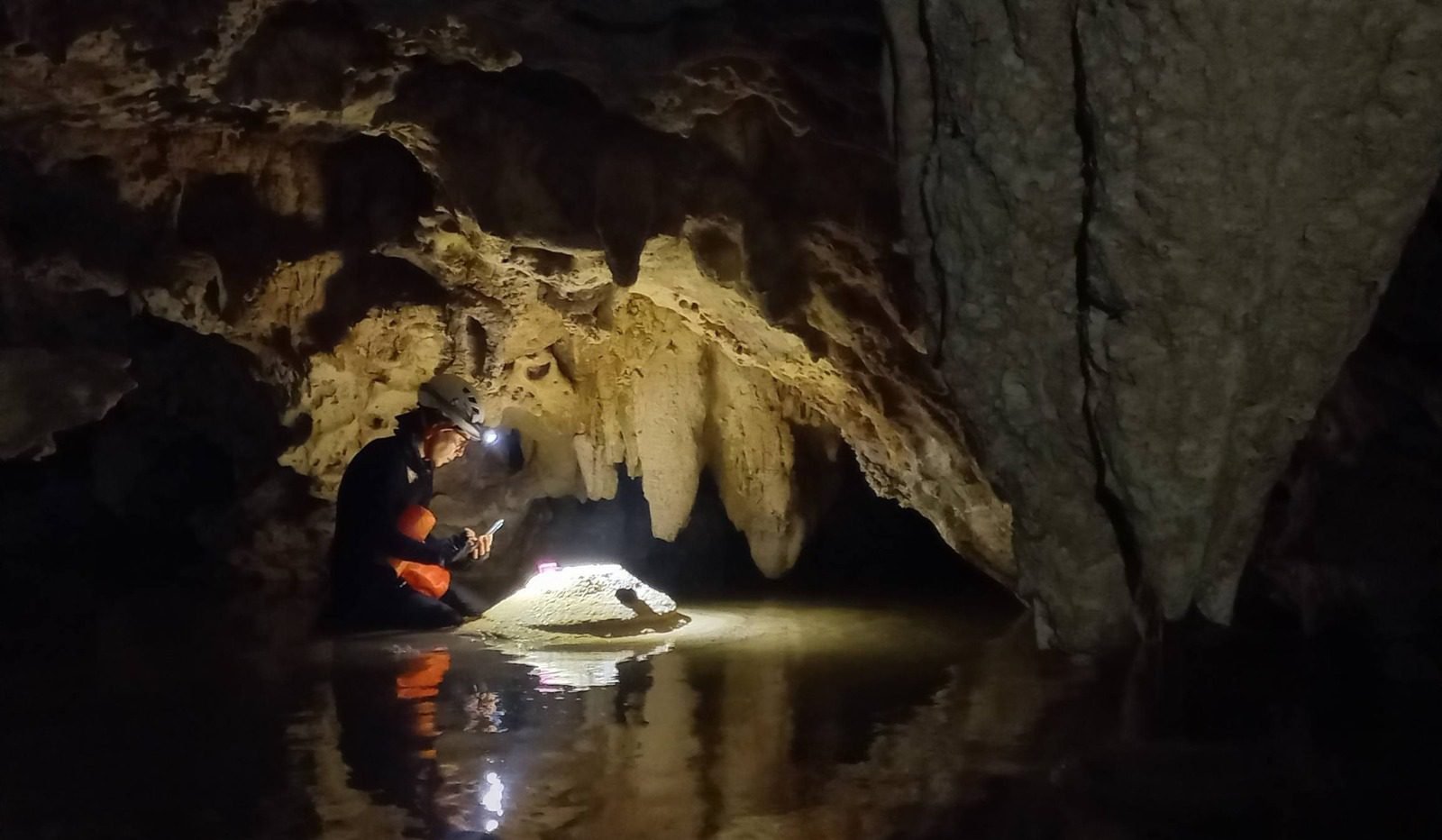
PLAYA DEL CARMEN, Quintana Roo – The Cenotes Urbanos project aims to conduct water quality studies in at least 100 caves and cenotes located within the urban area of Playa del Carmen, as part of a citizen science effort to understand the true state of the aquifer.
This was announced by Guillermo de Cristy, a member of this collective, who explained that the monitoring seeks to address two serious problems facing the region: water contamination and aquifer overexploitation.
He noted that contamination is an already present and documented phenomenon, recalling that the National Water Commission has warned on several occasions that approximately half of the monitored wells show some degree of contamination.
In parallel, he explained that aquifer overexploitation represents a growing threat, as more freshwater is extracted than the system can naturally recharge. He indicated that this situation has caused an annual reduction of close to 15 percent in the freshwater capacity of the aquifer, as a consequence of poorly planned urban development.
The specialist, who is also part of the Sélvame MX collective, detailed that the studies conducted in the cenotes have a dual objective: to identify existing contamination levels and to evaluate how much the freshwater is deteriorating or recovering under the constant pressure of extraction.
Finally, he emphasized that having scientific information will allow for gauging the magnitude of the problem and establishing a basis for decision-making that contributes to the protection of the aquifer, considered one of the most important natural resources of Playa del Carmen and the entire region.
Discover more from Riviera Maya News & Events
Subscribe to get the latest posts sent to your email.