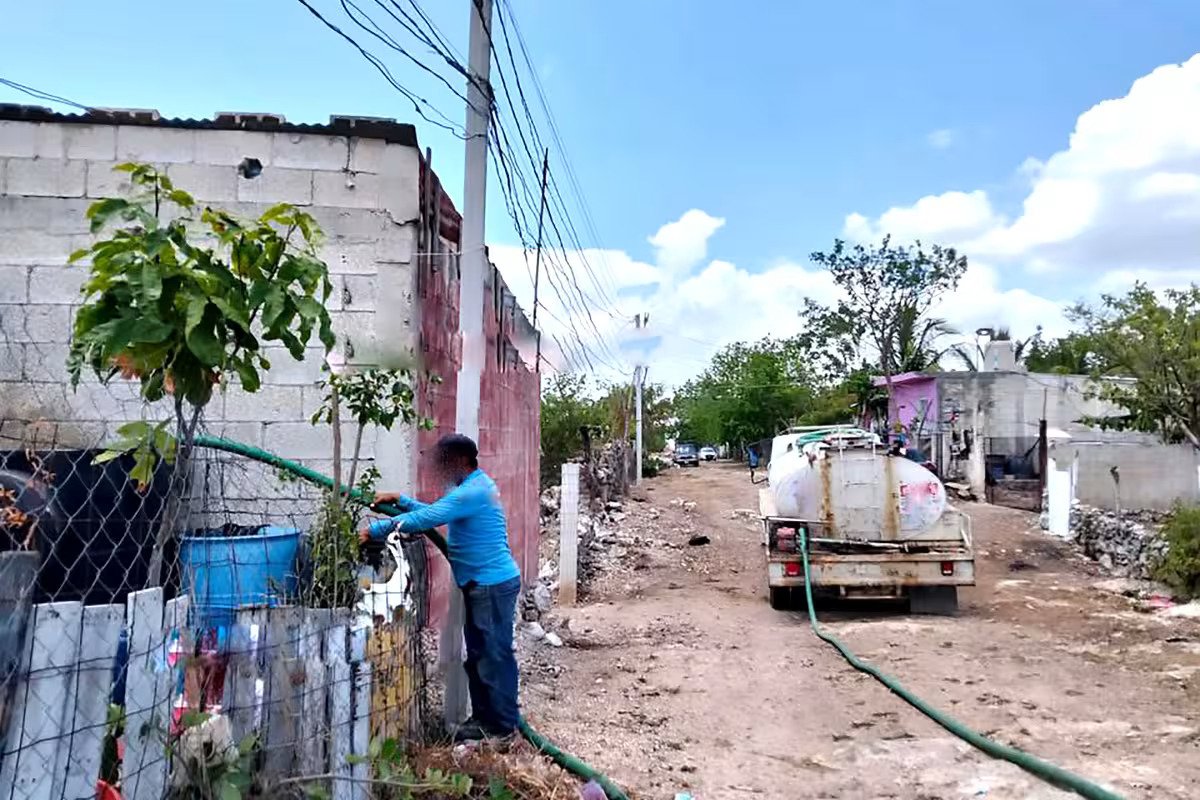
Cancún, Quintana Roo — Scammers are exploiting severe water shortages in informal settlements across Quintana Roo, taking advance payments for water deliveries that never materialize, residents and officials report.
The fraud targets neighborhoods in Cancún, Playa del Carmen, Tulum, Chetumal, Bacalar, and the mainland area of Isla Mujeres where access to potable water is unreliable. Fraudulent operators advertise water delivery via tanker trucks on social media, through printed flyers, and via loudspeaker announcements, request deposits, and then disappear.
“They offer urgent service, ask for a bank transfer, and when you pay, they stop answering calls and messages,” said Samantha Rivas, a resident of one affected neighborhood.
Quintana Roo has more than 300 informal settlements, with between 200 and 260 concentrated in the Benito Juárez municipality alone, according to the state government. Thousands of families in these areas lack basic services like potable water, sewage systems, electricity, and paved roads, forcing them to rely on private water trucks.
In the Tres Reyes neighborhood, resident Honorio González said his family has reported multiple cases without progress. “Complaints have been made to emergency numbers and anonymously, but we don’t know if they’re being investigated. People keep falling for it because they need water,” he explained.
Lucía Amezcua, a resident of the El Milagro neighborhood for over 20 years, said they depend almost entirely on water trucks. “We have agreements with some drivers to come every week or every 10 days, but when they stop coming, that’s when the ads appear and we’ve been defrauded,” she said.
In the mainland area of Isla Mujeres, resident Lucía Oxté suggested the alleged fraudsters may be colluding with legitimate water truck operators. “When the regular trucks don’t arrive, messages start circulating on WhatsApp or they drive around with loudspeakers offering water. Many believe they’re in cahoots,” she commented.
One Tres Reyes resident, who asked to remain anonymous for fear of reprisals, said he lost his savings after making a deposit of over 1,000 pesos for a water truck that never arrived. “We were left without money and without water. No one took responsibility,” he said.
Only in the Ejido Calderitas area have authorities identified 1,317 irregular lots. In Cancún, neighborhoods like Avante, Tres Reyes, El Milagro, and Porvenir have made partial progress toward municipalization and, in some cases, limited access to potable water.
While residents in several areas have secured agreements with the Federal Electricity Commission (CFE) for electricity, they still lack sewage systems, public lighting, pavement, and formally mapped streets. In this context of deprivation, purchasing water via trucks becomes essential, said Rodolfo Cifuentes, a professor at the University of the South.
Residents said they have tried to report the frauds, but cases rarely advance. Authorities did not respond to requests for comment on whether formal complaints or investigations exist regarding fraudulent water sales.
Neighbors urged the public to verify the legitimacy of providers before making any payments and to avoid advance deposits without confirming the seller’s identity, as the problem of water access continues to be an urgent need in dozens of Quintana Roo neighborhoods.
Discover more from Riviera Maya News & Events
Subscribe to get the latest posts sent to your email.