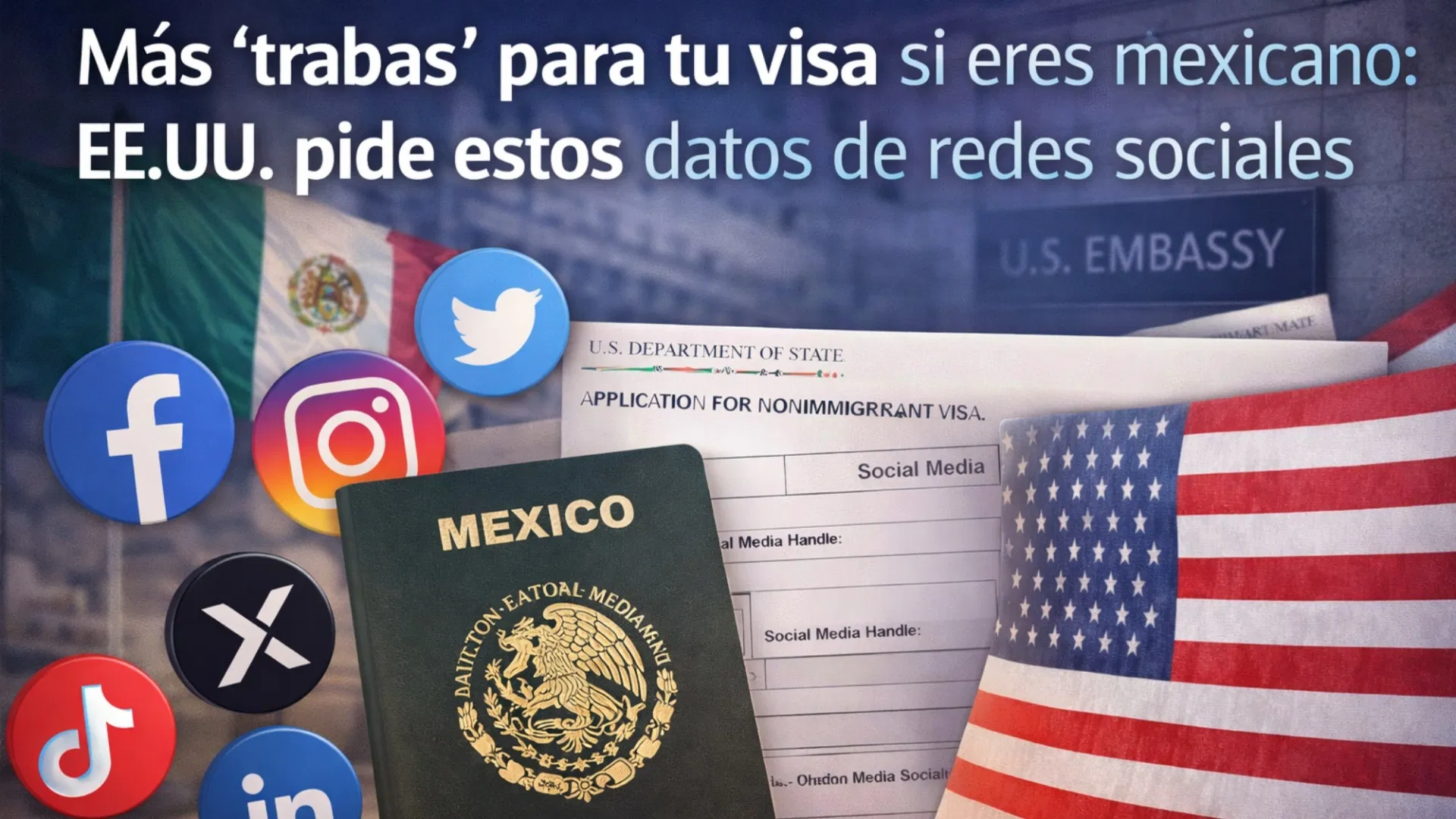
Mexico City — The U.S. government has tightened immigration verification processes for Mexican citizens, expanding mandatory social media reviews to visa categories previously exempt. Starting March 30, 2026, the State Department extended digital scrutiny, making an applicant’s online footprint a determining factor for visa approval under national security grounds.
What Social Media Data Must Applicants Provide?
When completing the DS-160 (non-immigrant) or DS-260 (immigrant) forms, applicants will find a specific “Social Media” section. Transparency is mandatory to avoid rejection for omitting information.
- Handles: Applicants must provide usernames for all platforms used in the past five years.
- Platforms included: The review covers accounts on Facebook, Instagram, X (Twitter), TikTok, LinkedIn, and other regional networks.
- Profile visibility: It is highly recommended that profiles remain public during processing. Private accounts may be interpreted as lack of cooperation, causing delays or exhaustive vetting.
- “None” option: If an applicant genuinely does not use social media, the system allows checking the “None” box without automatically affecting the application, provided it is truthful.
What Data Does the Embassy Not Request?
There is significant misinformation about account privacy. Mexican applicants should know the scrutiny has clear legal limits to protect user integrity.
- Passwords: Under no circumstances will a consular officer or the form request access passwords.
- Private messaging: Standard review focuses on public content; access to direct messages on WhatsApp or Messenger is not requested.
- Device retention: The process does not require handing over phones or computers for physical inspection during interviews, except in exceptional national security cases.
New Visa Categories Under Scrutiny in 2026
The March 30 expansion integrates applicants who previously bypassed this digital filter. Newly affected categories include fiancé visas (K-1, K-2), visas for crime victims assisting justice (T and U), and religious worker visas (R-1). Also included are visas for domestic workers (C-3, G-5) and exchange or training categories (H-3, Q, S).
Each visa decision is considered a national security matter. Omitting a TikTok or Instagram profile, even if it seems irrelevant, may be sufficient for the system to detect an inconsistency and flag the application with an administrative hurdle difficult to reverse.
Discover more from Riviera Maya News & Events
Subscribe to get the latest posts sent to your email.