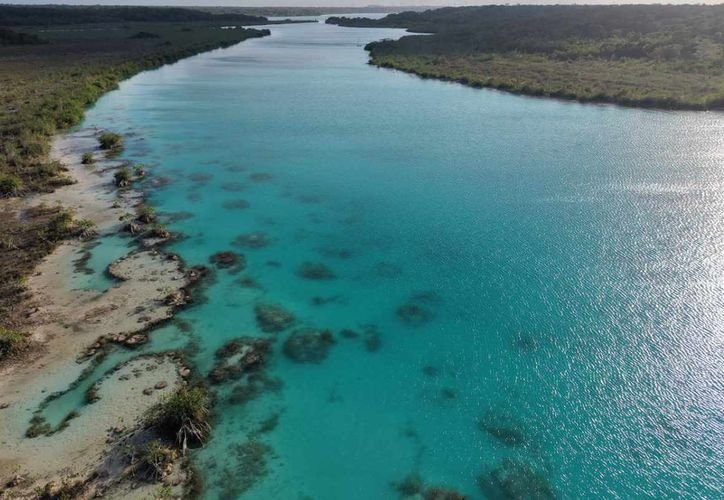
Bacalar, Quintana Roo — The iconic Bacalar Lagoon, famous for its striking colors and ancient stromatolites, faces a critical vulnerability due to its porous limestone geology, which allows pollutants to reach its waters within hours, scientists warned in a new study.
Research led by Jesús Navarrete, a scientist at the College of the Southern Border (Ecosur), under the project “The Hidden Universe of Bacalar,” reveals the lagoon’s health depends on a delicate chemical and biological balance. With calcium concentrations exceeding 600 milligrams per liter, the lagoon has supported stromatolites—ancient structures representing Earth’s earliest life forms, surviving for over 3.5 billion years.
However, this same chemical composition makes the aquifer highly permeable to foreign substances. Due to the limestone soil, contaminants from urban pressure or hotel activity can seep into the underground cave system and reach the water body in hours or days, causing immediate imbalance in biological communities.
“The fragility of the environment is not a recent phenomenon but has been historically accentuated by resource extraction like chicle and mahogany wood, as well as human footprint, activities that altered the original vegetation structure,” Navarrete said. “Each type of flora in the basin offers specific resources that sustain the food chain, so the loss of plant diversity directly impacts the ecosystem’s resilience.”
Under Environmental Stress
The study warns that with high human activity without planning, the lagoon is transitioning toward accelerated degradation, marked by the loss of key species that regulate water purity.
Data from a species health indicator show alarming figures for public management in Quintana Roo. Currently, the biological maturity index has dropped to just 2.4, a value reflecting a community under intense environmental stress.
“This decrease functions as a scientific alert that clashes with traditional tourism promotion narratives,” researchers noted. “The destination’s economic success is intrinsically linked to the ecosystem’s health.”
When the biotic structure degrades, the environmental and recreational value of the lagoon’s 42-kilometer expanse is at permanent risk, demanding an urgent reevaluation of the current development model.
Discover more from Riviera Maya News & Events
Subscribe to get the latest posts sent to your email.