Chetumal, Quintana Roo — The DIF Quintana Roo family services agency announced it is intensifying a bone marrow donation campaign in response to an increase in childhood cancer cases.
The campaign primarily targets young adults aged 18 to 40, with the goal of saving the lives of children and adolescents suffering from leukemia and other cancers, said DIF Quintana Roo President Verónica Lezama.
Marking Childhood Cancer Awareness Month, Lezama said the agency is working with the Health Department to provide comprehensive care for minors undergoing treatments like chemotherapy, radiotherapy, or, in more severe cases, bone marrow transplants.
Through its “Red Caminando Juntos” program, DIF provides lodging, meals, and, for the past few months, transportation to the oncology hospital—support that had been requested by parents. The occupancy of the assistance house varies depending on each child’s treatment duration, but Lezama noted it generally stays full.
The support is for the patient and one adult companion, though they sometimes adjust spaces to accommodate more family members, requiring shared rooms. “The house is almost always full; it’s rotational, depending on the treatment each child is receiving,” she explained.
While there is no fixed number of children served due to constant rotation, the economic impact for families is significant. By not having to cover lodging, food, and now transportation costs, parents can focus on the child’s care. Many spend most of their time at the hospital and return only to rest or clean up, Lezama said.
On the causes of childhood cancer, Lezama clarified there is no single determining factor. She noted that in most cases, it involves congenital conditions.
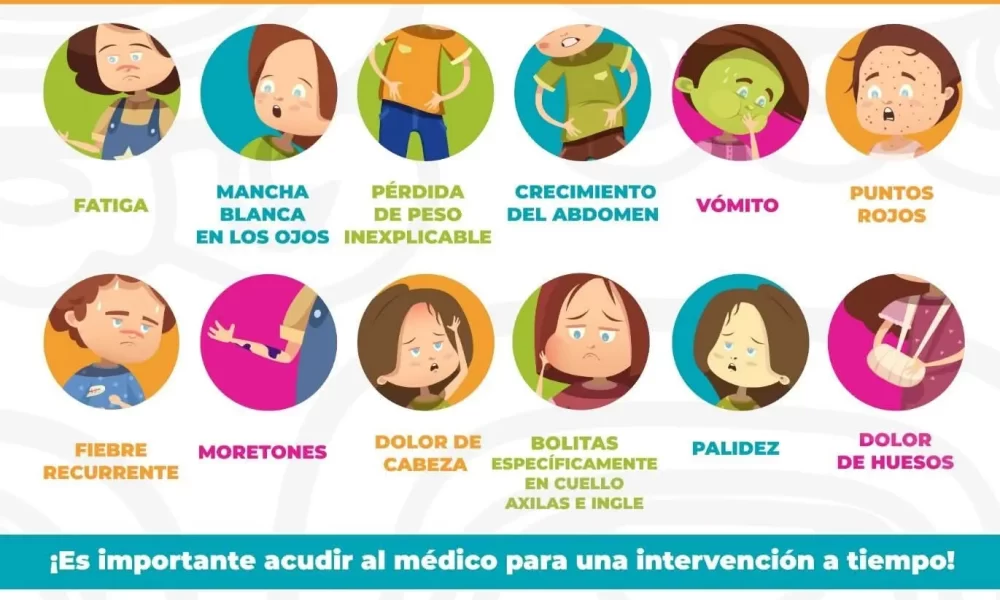
However, she stressed the importance of early detection, as a timely diagnosis can make a difference in recovery. Key warning signs include recurrent fevers, unusual fatigue, headaches, bone pain, and frequent bruising without apparent cause. She recalled that leukemia is the most common type of cancer in childhood and that when the disease advances, a bone marrow transplant often becomes the last alternative to save the child’s life.
In this context, she highlighted that the bone marrow donation campaign is coordinated with the National Marrow Donor Program, which handles compatibility testing between donors and patients.
The registration process for donors is simple and non-invasive: a saliva sample is taken with a cheek swab; later, the genetic information is added to an international database. If found compatible with a patient, the donor is contacted.
Contrary to myths surrounding the process, Lezama explained that in most cases donation is done on an outpatient basis through stem cell extraction from the blood, a procedure similar to a blood donation. Only in more complex situations is a bone marrow puncture from the hip required, from which the donor recovers in about a week.
Currently, Quintana Roo has recorded 17 successful compatibility cases, meaning patients who found a compatible donor within the registry. However, Lezama acknowledged that greater social awareness is still needed to expand the base of potential donors, especially among young people.
“We’re talking about donating life while alive. A registration can mean the chance for a child to be saved,” she emphasized.
The campaign is permanent, and interested individuals can visit specialized modules at municipal DIF offices, the central DIF Quintana Roo headquarters, and its representations in the northern and central parts of the state.
Discover more from Riviera Maya News & Events
Subscribe to get the latest posts sent to your email.