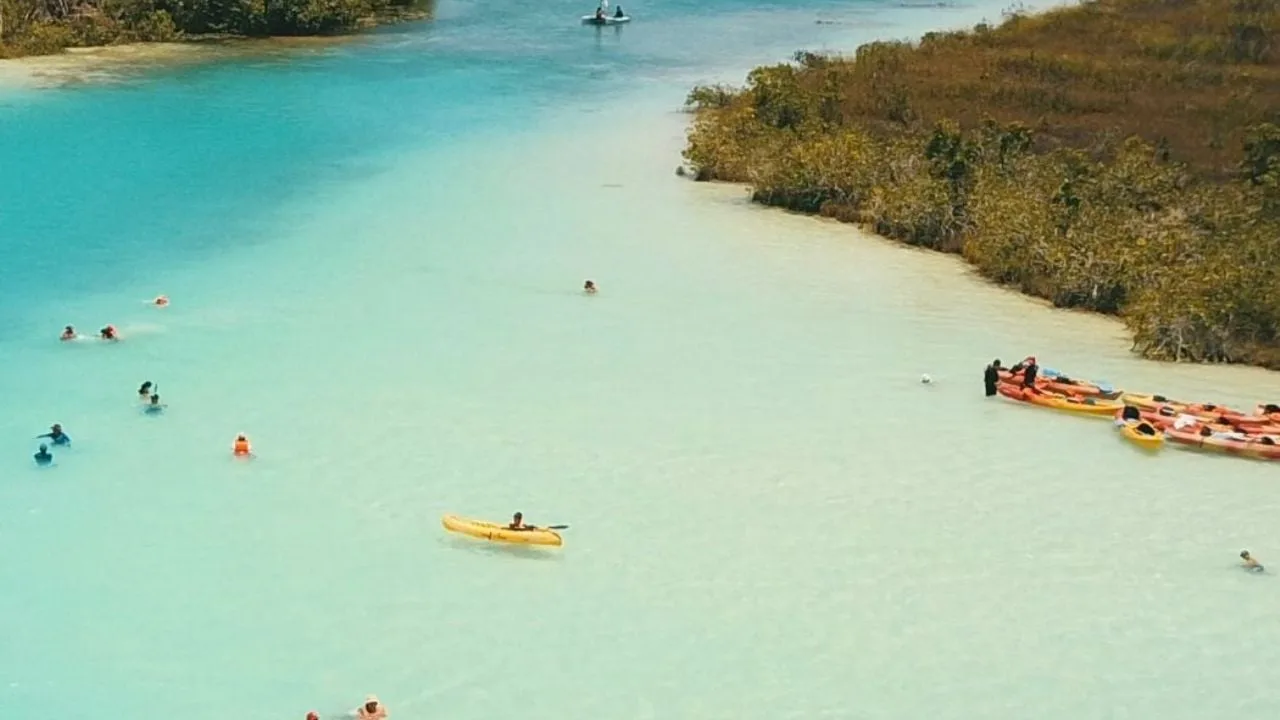
Chetumal, Quintana Roo — The municipality of Othón P. Blanco has consolidated seven tourism products with distinct identities, aiming to position its key communities as emerging destinations in gastronomic, cultural, nature, and beach tourism segments.
Beatriz Alamilla Cruz, director of Tourism Development, announced that this strategy is part of the Municipal Tourism Plan, aligned with the Municipal Development Plan. It seeks to strengthen the organized promotion of each locality based on its vocation and most representative attributes.
“Within the municipality, we have identified and positioned tourist destinations with their own identity. Each one has a brand that distinguishes it and allows us to better communicate its essence,” she explained.
Among the consolidated products are Chetumal, promoted as “Land of the Red Trees”; Calderitas, called “Gastronomic Capital of the South”; Xul-Ha, identified as “Where the Water Begins”; Huay-Pix, positioned as “Laguna Milagros”; Mahahual, under the concept “Paradise of the Great Mayan Coast”; the Ribera del Río Hondo, promoted as “Ribera del Río Hondo Route”; and the Archaeological Zones.
Regarding Huay-Pix, Alamilla noted that officials chose to strengthen the “Laguna Milagros” brand after discussions with the local sector.
“They want to position Laguna Milagros more than the town’s name because it’s easier to remember and it’s their most emblematic natural resource,” she said.
The official highlighted that institutional work also includes signing collaboration agreements. By the end of 2025, the Tourism Department finalized two strategic agreements, including one with the company Chetubús, which expanded the tourism tour offerings.
Thanks to this alliance, authorities implemented a route to the Oxtankah archaeological zone. Although the service is temporarily paused for operational adjustments, the director described the experience as successful.
The tour included guided transportation with historical and cultural information during the journey, a visit to the archaeological zone with explanations by an archaeologist, and a stop in Calderitas to enjoy local gastronomy.
“It’s not just transportation; it’s a comprehensive experience that combines history, culture, and gastronomy,” she affirmed.
Alamilla explained there is interest in resuming and regularizing this route, with the possibility of scheduling departures on weekends. Sundays are attractive for domestic tourism because access to archaeological zones is free for Mexicans and residents, while Saturdays can focus on visitors arriving by air.
She indicated that recent tours included both local residents and tourists who came directly from the airport to join the experience, demonstrating the product’s potential.
The goal is to schedule at least two tours per month and, in case of high demand during seasons like Holy Week, increase the frequency. However, the operation depends on the transportation company, as the municipality promotes the initiative but does not have its own units for execution.
“We promote these initiatives from the Tourism Department, but the private sector must adopt and operate them,” she emphasized.
Discover more from Riviera Maya News & Events
Subscribe to get the latest posts sent to your email.