Classical regional geography identified comarcas as natural regions whose human and historical characteristics would be determined (geographic determinism) or at least influenced by physical factors, primarily by relief and rivers (which mark their boundaries and define areas with similar climate, vegetation, or soils).
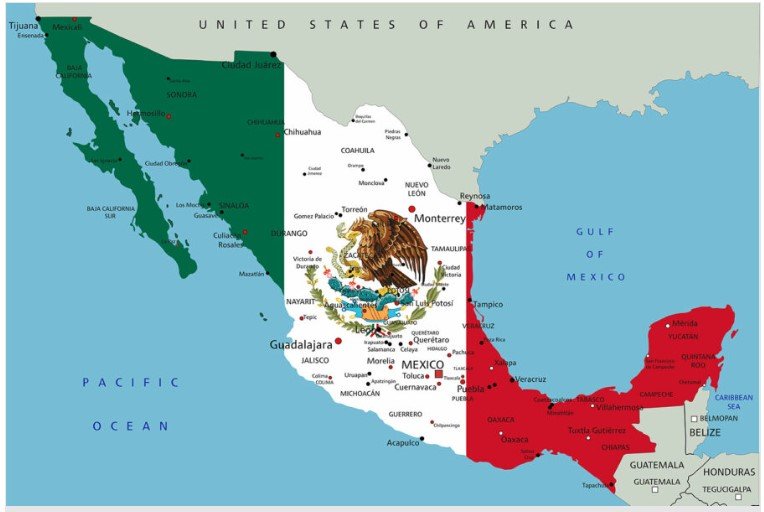
The complexity of Mexico’s geography, its compartmentalized relief, and the multiplicity of climates entail a great variety of differentiated natural regions. The complexity of its history has also forged different idiosyncrasies and particularisms in each comarca. In this way, we can find the Comarca Lagunera, El Bajío, or La Mixteca.
In Spain, the Law Regulating the Bases of the Local Regime (LRBRL) dedicates its Article 42 to comarcas, whose denomination and treatment can be different, according to autonomy statutes. Few autonomous communities have decided to give legal existence to their comarcas, through intermediate institutions between municipalities and provinces, as is the case in Aragon, Catalonia, or Castilla y León, which only has the Comarca de El Bierzo. Although there can also be those that exceed the territory corresponding to a single province, as enabled by Article 42.2 of the LRBRL.
Due to their relationship with the rural environment and agricultural products, many comarcas are identified with the designations of origin that protect their local production, as in the case of cheeses and wines.
In the opinion of López and Benito (1999), there is a need to drastically reduce the number of municipalities and give way to a more rational and better-equipped local administration. In contrast, the Spanish situation is that it has 8,116 micromunicipalities, with a cantonal model that only a municipal merger law could confront, given the proven lack of willingness to integrate by the municipalities themselves. The problems of the fragmentation of the Spanish municipal map persist without a profound reform to modify it (Riera, Haas, Amer, and Vilaplana, 2005).
This situation differs greatly from that existing in the United Kingdom, Germany, or Belgium, the latter country where the reform carried out starting in 1977 reduced the more than two thousand communes existing until then to 581 currently, having as objectives the consolidation of viable entities by the number of residents, adequate surface area, and appropriate financial means, even if criteria of more direct political participation are sacrificed for this.
All of the above raises a question that I leave for reflection. In Mexico, with around 2,478 municipalities, most of them without economic viability, would they be willing to merge their governments, territories, and populations?
Discover more from Riviera Maya News & Events
Subscribe to get the latest posts sent to your email.