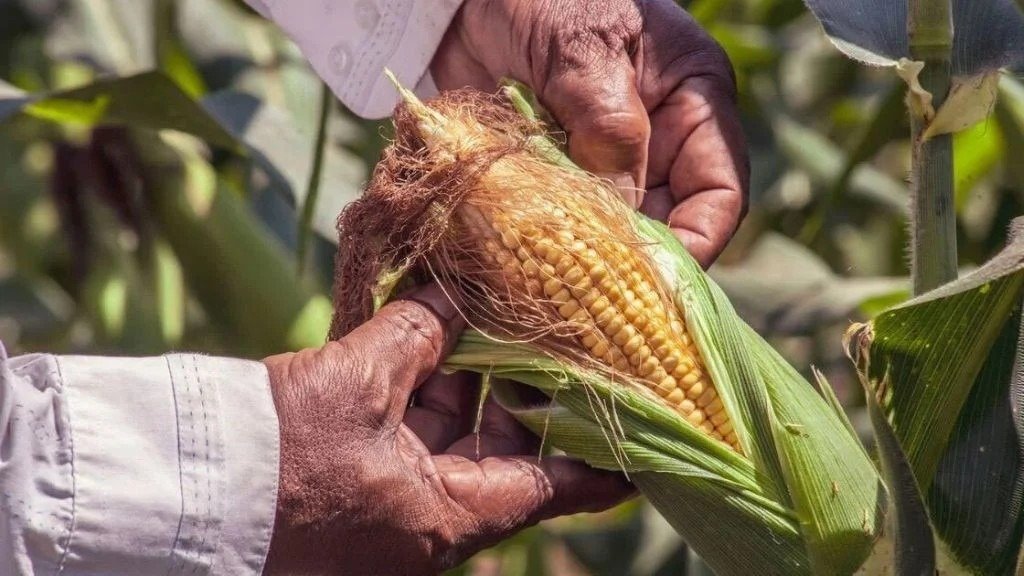
Guanajuato, Mexico — A flood of imported genetically modified corn has left farmers in Guanajuato unable to sell nearly half a million tons of their harvest, causing significant economic losses for small and medium-sized producers, according to a state agricultural representative.
Héctor Ortega Razo, the Guanajuato representative for the National Peasant Confederation (CNC), said the federal government’s decision to allow excessive imports of yellow GMO corn has saturated the market and shut out domestic growers.
“Farmers across the country, not just in Guanajuato, are filled with sadness because the doors to international exports were opened wide for yellow GMO corn until the market became saturated,” Ortega said. “Now we have almost half a million tons in Guanajuato that we cannot sell because of this.”
Ortega explained that imported GMO yellow corn should be used for animal feed and livestock fattening, but due to a lack of regulation, the grain is being used for human consumption and tortilla production.
“This is unfair competition — opening the borders for imports with one purpose, and then that grain displaces thousands of agricultural producers who cannot compete on price because of the yield this GMO grain produces compared to our corn,” he said.
Guanajuato plants between 400,000 and 430,000 hectares of corn annually, making it one of Mexico’s top producing states. This area includes both rain-fed and irrigated cycles, with production that can exceed 1.5 million tons.
“They saturated the market, and now agricultural producers cannot sell our grain in Guanajuato,” Ortega said. “For four months, there has been a lack of income in rural families. The government is pushing us to stop working our lands.”
According to the federal government, Mexico imports about 23 to 25 million tons of yellow corn annually, mostly GMO and from the United States — a figure that reached record levels in 2024 and 2025. Officials say nearly all of this grain goes to the livestock sector and food industry.
Farmers also cite high fuel costs for agricultural machinery as another challenge, arguing that the government should direct resources to farmers rather than to what they call alleged external humanitarian aid.
“It is very sad as a farmer to go to a gas station and want to fill your tractor with diesel and see that the price is between 27 and 28 pesos, while the government gives away millions of barrels of oil in supposed humanitarian aid,” Ortega said. “I cannot plow my field because I don’t have the resources.”
Ortega called for genuine democracy and a rescue of the countryside, warning that otherwise, fewer farmers will work the land each year.
“We need real democracy; a single party cannot set the country’s course, as we have seen with the disappearance of programs,” he said. “That is why it is necessary for farmers to keep our heads high to demand our rights.”
Discover more from Riviera Maya News & Events
Subscribe to get the latest posts sent to your email.