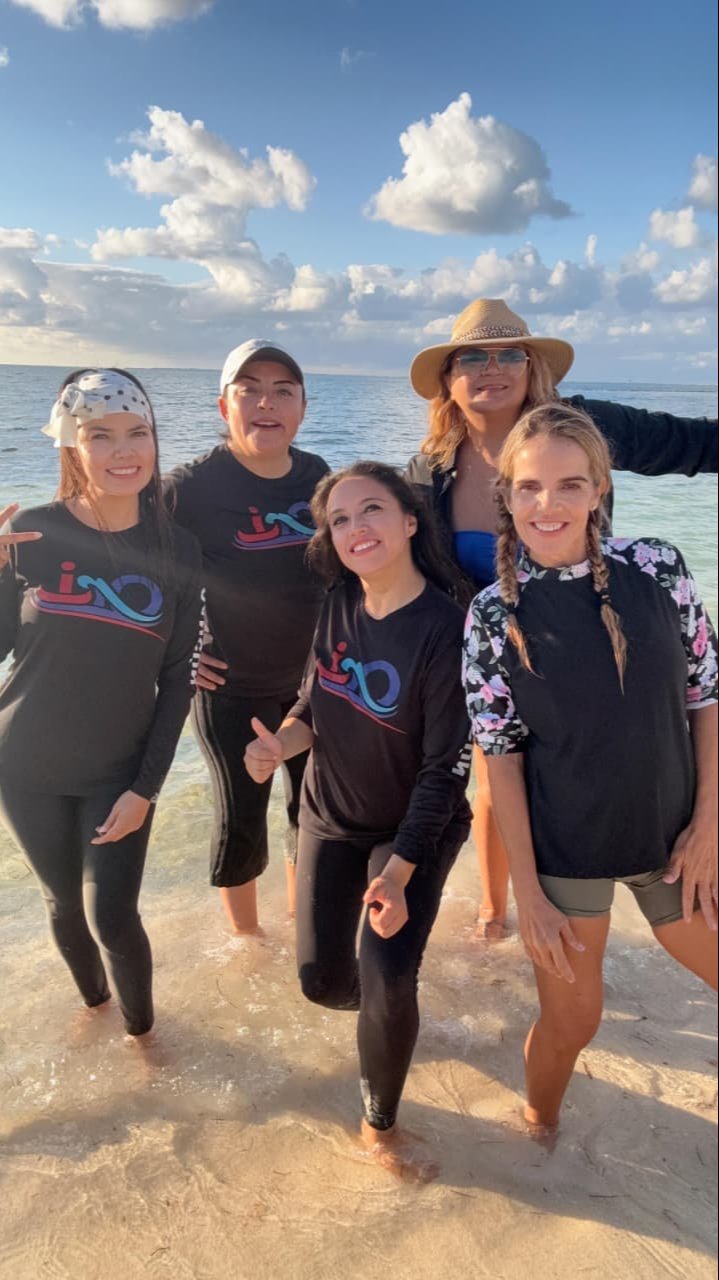
PUERTO AVENTURAS, Mexico — At sunrise on February 14, paddles will cut through the Caribbean waters off Puerto Aventuras as teams line up for the Rumba Regatta 2026, a growing regional competition that blends sport, culture, and community. Among the crews preparing to compete is the Ori canoe team, an all-women collective whose participation this year stands out not only for athletic ambition, but for its commitment to inclusion: half of the team’s paddlers identify as members of the LGBTQ+ community.
For team founder and canoe owner Oriana Moya, known among paddlers as “Ori,” the regatta represents more than a race. It is a chance to honor ancestral maritime traditions, promote gender equity in sport, and create space for athletes who may not always see themselves represented in competitive environments.
“Our team is made up of 11 women, and on this occasion half of the canoe will be integrated by members of the LGBTQ+ community,” Moya said in an interview ahead of the event. “That makes us proud, because it reflects who we are and what we believe in.”
A Call That Sparked Participation
The Ori team’s decision to enter the Rumba Regatta was influenced in part by the event’s participation guidelines. According to Moya, the call for entries specified that teams should be composed of at least 60 percent women and 20 percent men, a structure designed to encourage gender balance and open the door to broader participation.
“They saw the call, and because of those requirements, it motivated them,” Moya explained. “They asked if they could compete using my canoe, and from there everything started to take shape.”
In a sporting landscape where women’s teams — particularly those rooted in traditional watercraft — often struggle for visibility and resources, such criteria can make a meaningful difference. By prioritizing women’s participation, the regatta has attracted crews that might otherwise remain on the margins of competitive rowing.
Training Across the Riviera Maya
Preparation for the regatta has been intensive and varied. The Ori team trains in multiple locations across the northern Riviera Maya, adapting to the distinct conditions each offers. According to Moya, this diversity has been key to building both technical skill and confidence.
“In Puerto Aventuras and in Tulum, the coast is rockier and there are more waves,” she said. “In Puerto Cancún, where we also train, there’s strong swell near the lighthouse. All of that helps us prepare.”
The team combines marine training — long-distance paddling, maneuvering in chop, and buoy turns — with land-based conditioning, focusing on strength, endurance, and injury prevention. This dual approach reflects the demands of Maya-type canoe racing, which requires not only cardiovascular fitness but also coordination and rhythm among paddlers.
The Race Ahead
The Ori canoe will compete in the Maya-type Canoes category, covering a route of approximately 10 to 12 kilometers. The course includes a buoy turn, with the start line set in Puerto Aventuras. Final standings will be determined by distance covered and time to finish, with medals and sports kits awarded to top performers.
Moya expects close competition, particularly from teams based in Tulum and Puerto Aventuras, where paddling clubs have become increasingly active in recent years.
“The competition will be very close,” she said. “The level is high. We’re racing against people who train seriously and who have already competed in other events.”
Beyond Competition: Inclusion and Community
While performance matters, Moya is clear that the Ori team’s mission extends beyond podium finishes. From its inception, the club has positioned itself as inclusive, welcoming women of different backgrounds, identities, and life experiences.
For LGBTQ+ paddlers, that openness can be especially meaningful. Sports environments have not always been safe or affirming spaces, and inclusive teams help challenge that history by normalizing diversity on the water and onshore.
Moya emphasizes that respect — for individuals and for tradition — is central to the team’s identity.
“We are an inclusive club, and we respect the tradition of our Mayan ancestors,” she said.
Mayan Canoes and Living Tradition
Maya-type canoes are more than sporting equipment; they are vessels tied to centuries of maritime history in the Yucatán Peninsula. Long before modern regattas, coastal Maya communities relied on canoes for fishing, trade, and communication, navigating open water with skill and intimate knowledge of wind, currents, and tides.
The revival of traditional canoe designs in contemporary competitions reflects a broader cultural movement across the region, where athletes and organizers seek to honor Indigenous knowledge while adapting it to modern sport.
Moya describes rowing as a form of connection — not only to the sea, but to emotional and spiritual renewal.
“We maintain that Mayan mysticism of our ancestors,” she said. “Just as they did, when we row we deliver everything that hurts us, every emotional load. Getting into the water at dawn brings renewal, just as it did for them.”
For many paddlers, early-morning training sessions become moments of reflection and release, framed by the quiet of the sea and the shared rhythm of synchronized strokes.
How the Club Began
Moya’s journey into canoe racing began relatively recently. Three years ago, she participated in a competition in Brazil, where she was introduced to Polynesian-style canoes and the competitive culture surrounding them. During that trip, she learned that a Brazilian boat builder living in Cancún was crafting similar canoes locally.
“I had one made for me,” she said. “And from there, the club was born.”
Her goal, she explains, was simple: to share the experience of rowing with others and create a space where people could discover the physical and emotional benefits of paddling. Over time, that vision evolved into a structured club with regular training sessions and a growing roster of committed athletes.
Puerto Aventuras as a Sporting Hub
The choice of Puerto Aventuras as the regatta venue highlights the town’s increasing role as a hub for water sports and endurance events. Known for its marina, protected bays, and access to open Caribbean waters, Puerto Aventuras offers conditions well suited to canoe racing.
Local organizers see events like the Rumba Regatta as opportunities to promote active tourism, celebrate coastal culture, and bring together athletes from across Quintana Roo and beyond.
An Invitation to the Water
As race day approaches, Moya hopes the team’s presence will inspire others — particularly women and LGBTQ+ individuals — to consider rowing as a sport and a practice.
She extends an open invitation to anyone interested in joining the Ori club, emphasizing that prior experience is less important than commitment and respect.
“Rowing changes you,” she said. “It strengthens your body, but it also clears your mind. And when you do it together, it builds community.”
When the starting signal sounds on February 14, the Ori canoe will push off alongside seasoned competitors, carrying not only paddlers but a message: that tradition, inclusion, and high-level sport can share the same vessel — and move forward together.
Discover more from Riviera Maya News & Events
Subscribe to get the latest posts sent to your email.