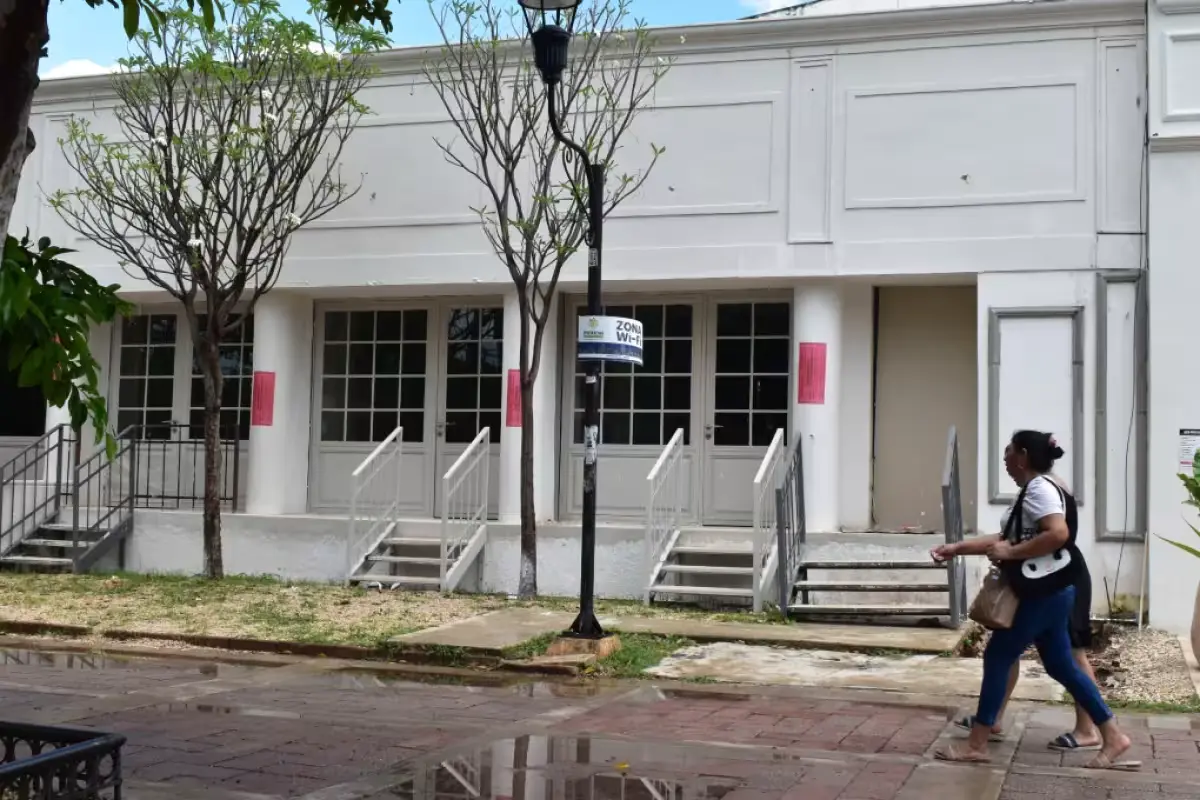
Mérida, Yucatán — Authorities suspended 22 construction projects in Mérida’s historic center last year for allegedly violating federal regulations protecting cultural heritage.
The Yucatán center of the National Institute of Anthropology and History (INAH) confirmed the measures do not involve permanently closing the properties but temporarily halting work when irregular interventions are detected in buildings considered historical monuments or located within protected zones.
The distinction is crucial: this is not about shutting down properties but stopping modifications that could alter, damage, or even destroy architectural elements with historical value.
Legal Basis
The legal basis for these actions lies in the Federal Law on Archaeological, Artistic, and Historical Monuments and Zones, which establishes the requirement for prior authorization for any restoration, conservation, or modification work on such properties.
Article 12 of this legislation states that restoration, conservation, or modification work on immovable property considered monuments, carried out without corresponding authorization or in violation of granted permits, must be suspended by order of the competent Institute.
When this provision is not followed—or granted permits are violated—INAH is authorized to order the immediate suspension of work.
The procedure is visible on-site: official seals placed on the buildings prevent the continuation of work until owners regularize their situation.
Breaking these seals is not a minor matter. It constitutes an administrative offense that can lead to economic sanctions, in addition to the obligation to demolish or restore, at the offender’s expense, any intervention carried out without authorization.
Architectural Safeguarding
Mérida’s Historic Center, recognized for its colonial layout and 19th-century architecture, forms part of a zone of historical monuments requiring constant vigilance. In this context, federal regulations also oblige owners of adjacent properties to request permission before carrying out excavations, foundations, demolitions, or new constructions.
The reason is clear: even seemingly unrelated work can affect the stability or integrity of protected buildings.
This obligation applies to both private individuals and public agencies at all three levels of government, reinforcing the collective nature of responsibility for heritage.
In urgent situations, municipal authorities can intervene as auxiliaries of the Institute and order the provisional suspension of work, with the owner, the technical supervisor of the project, and the executor being jointly responsible.
The 22 halted projects remain under review. It will be the responsibility of the owners to demonstrate they meet the technical and legal requirements to resume work.
Meanwhile, the INAH Yucatán Center maintains control over authorizations in the zone, in an effort to balance urban development with historical conservation.
Discover more from Riviera Maya News & Events
Subscribe to get the latest posts sent to your email.